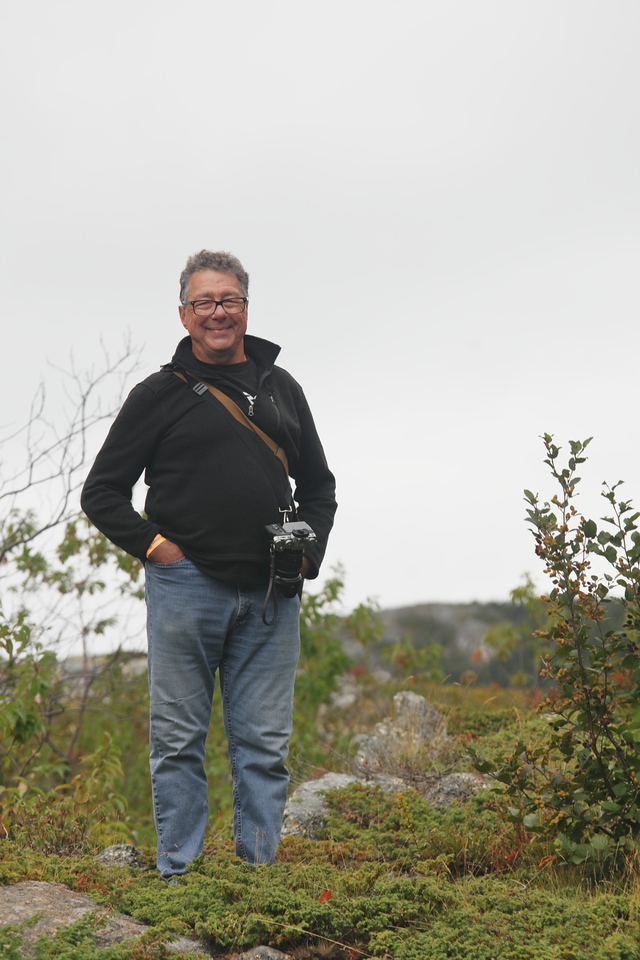
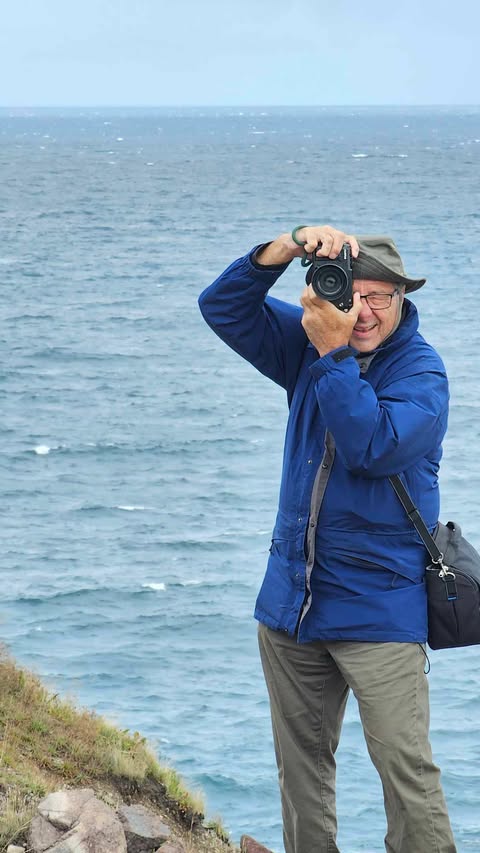
Engineer, motorcycle racer, photographer, and lover of all things with engines that move – cars, bikes, planes, and ships – are all ways to describe Larry Strung. For the last two years, Larry has captured the essence of Targa Newfoundland, the rally, the people, and the place, as one of the rally’s official photographers.
His stunning photos have appeared in our advertising, on this website, and in the Targa newsletter. He may have worked as an engineer but he has the eye of an artist and heart of a racer. We posed some questions to learn more about him.
Where were you born and where do you live now?
I was born and raised in Toronto and lived in the “GTA” most of my life. I retired from working full time (as an engineer in the auto industry) and moved west to Wallaceburg, Ontario to get away from the GTA congestion, and enjoy cheaper real estate prices!
What’s your background?
My parents were both German immigrants to Canada. They were lucky to come to Canada in the 1930s. My older brother – 10 years older than me was born in Toronto in 1946. Needless to say, speaking German in 1946 Toronto was not a popular thing, so we never learned to speak German at a young age, unlike most German immigrants from the 1950s onwards, whose kids are typically fluent in both German and English. My loss! Languages and music I consider both to be door openers to communication across barriers. Sadly, I am inept at either.
Do you work professionally as a photographer full-time or do have other work experiences?
There was a period in the late 2000s when I was unemployed as an engineer. I had been working for Magna for 20 years, with my last stint being in Liverpool, England for 4 years. With the recession underway, Magna was cutting jobs and closing plants. When I returned from England they had no job for me. I did get a full year severance package, with the rider that I couldn’t be employed in the auto industry.
For the next four years I attempted to make a living as a professional photographer. We starved. I give my every respect to Ralph Saulnier and others who can make a living at photography! You are better men than me! A chance meeting of a former Magna colleague gave me an opportunity to return to engineering in the auto industry, where I worked for a further 10 years.
What is your background in photography and motorsports?
My dad was a keen amateur photographer. We had a full dark room in the basement of our family home and my older brother was a sports car enthusiast. My older brother was kind enough to take me to Mosport for car races beginning in 1967. I would have been 9 and he 19 then. I had a Brownie Starmite box camera then, and still have some prints from the 1969 F1 race at Mosport with this camera. Like many kids, I suppose, the camera was a tool to take pictures of things and events that you dream about having and doing. So cars and cameras from an early age.
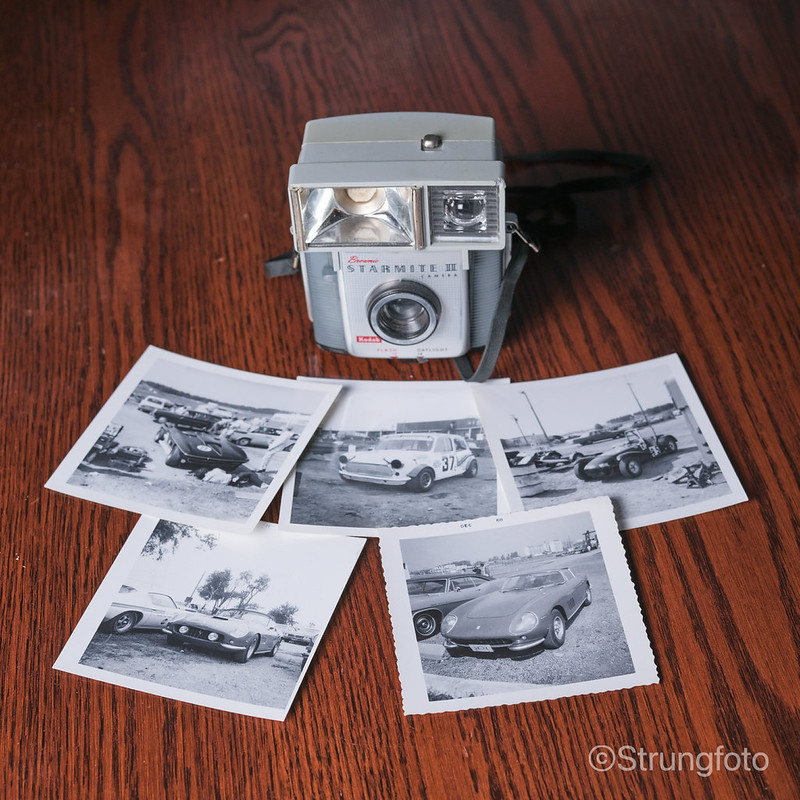
Funny story, when I was 14, I had freedom to wander the city of Toronto via public busses, subway trains, and street cars. With my trusty Brownie, I would explore the city, often into dodgy second hand bookstores looking for back issues of Road & Track, or Sports Car Graphic magazines.
One day I happened upon a 1960 Porsche 356 Roadster – I was mad about Porsches – sitting out front of a downtown Toronto walk-up. I went up and knocked on the door to enquire if I might take some pictures of the car. Amazingly, the owner, who must have been surprised to see this very forward kid, invited me in for tea to talk about the car. He ended up taking me for a drive in it all the way up the Don Valley Parkway and across the 401. We must have been out for nearly an hour.
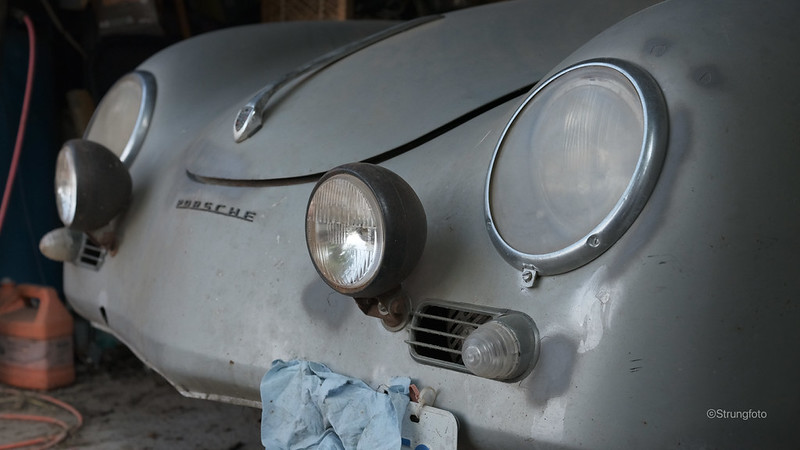
When we got back, he said, “In a couple of years, I’ll want to sell the Porsche. You’ll be 16 then, and I’ll give you first refusal to buy the car for $800.” He gave me a note to that effect, and we exchanged phone numbers. I took the note home, and immediately got a part-time job to save for the car. It was as a shrimp cook at a nearby Gourmet shop. I printed a picture in our darkroom I had taken of the 356 and posted it over the sink in the shop as incentive, and began to save. I wish I could find that print!
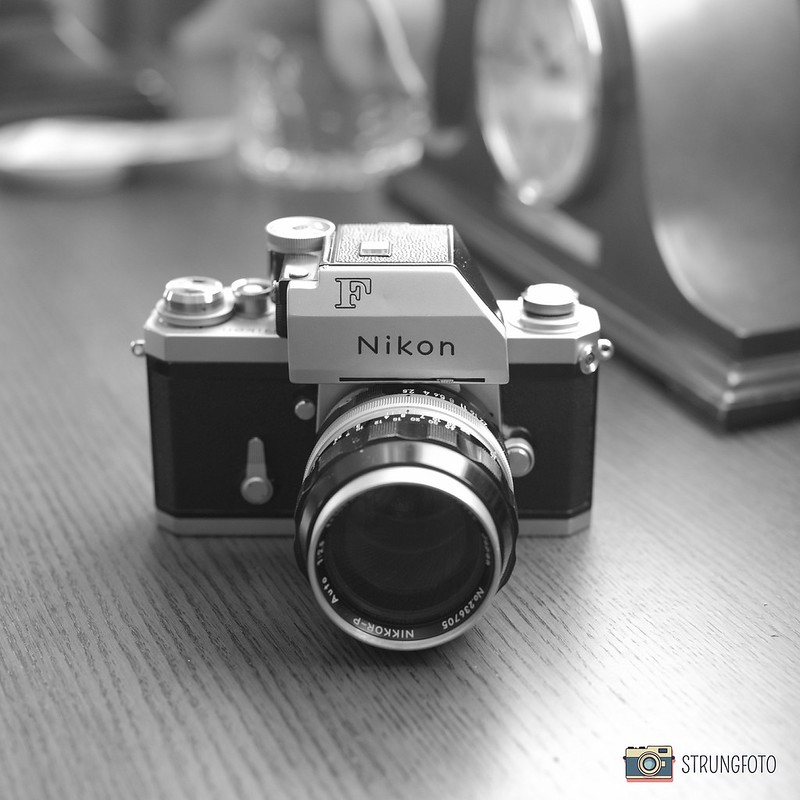
Amazingly, the man was true to his word, and he called just after my 16th birthday. The offer was still good, but I had only managed to save $600 from my job that paid $1.75/hr. I asked my dad for a loan of the balance, and like a good German father, he replied, “Don’t be silly, no son of mine is having a Porsche when he is just 16 years old!” So that was that. I took the $600 dollars and bought a Nikkormat camera (so I could make use of the lenses my dad had for his Nikon F) and a second hand motorcycle.
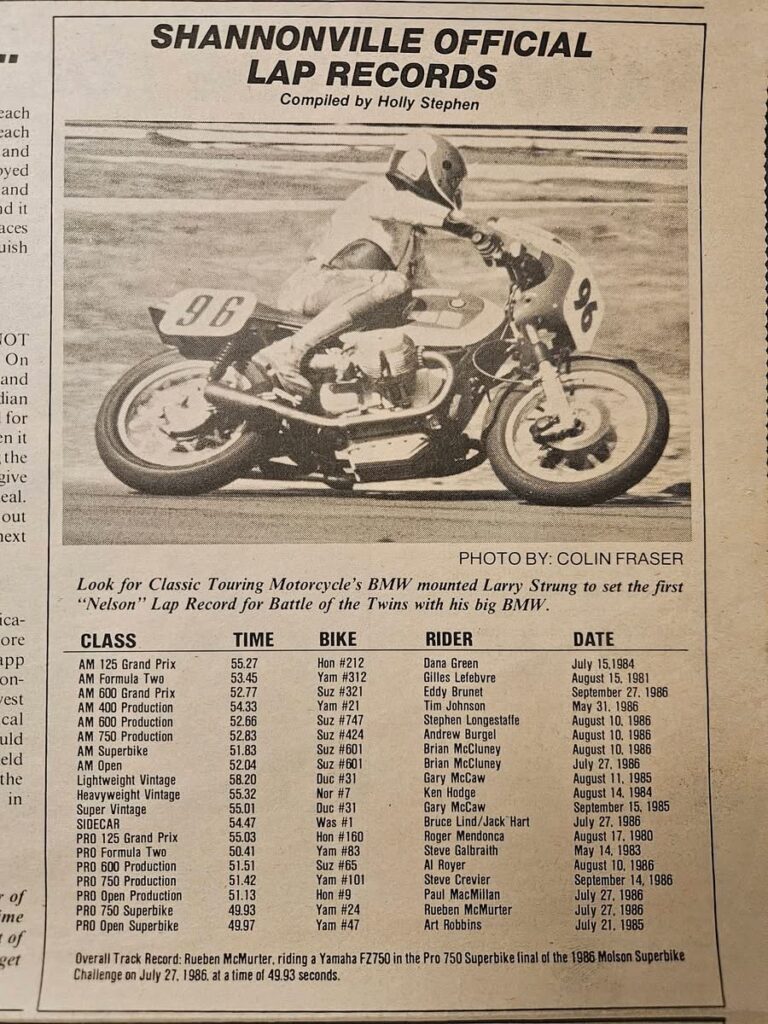
I ended up road racing motorcycles for 15 years, much to the chagrin of my parents. Naturally, they didn’t approve of that, either, and I had to move out of the house before I could begin racing. During that time period, I still had my camera but didn’t spend much time using it aside from taking snap shots at events. All of my focus and money was spent trying to be a better motorcycle racer.
Moving to England for Magna, and the new digital Nikon digital cameras that just became available, encouraged me to spend more of my spare time doing photography again.
How long have you been shooting the rally?
I’ve been invited to shoot Targa for the last two years, alongside Ralph, as a staff photographer on the event. I hope I get invited back to do many more!
How did you get involved?
My invitation came from Tom Pokorny and Corey Finkelstein, the two guys working at promoting the event in the Toronto area. We had met at various car events around Ontario over the previous few years, and they had become familiar with my photography on various Facebook forums we shared.
What keeps you coming back?
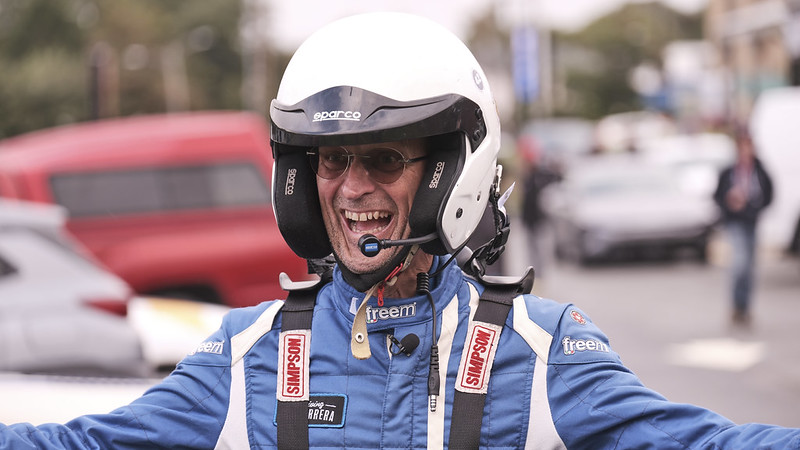
Targa Newfoundland, since it’s inception, has been a bucket list event for me. While I am not in a financial position to participate in the event as a driver, much as I would love to, the photography opens the door to participating in my own way. It’s a fantastic event, and I love being a part of it.
What equipment do you prefer to use?
I had been a Nikon user from pretty early on. About 10 or 12 years ago, Fujifilm introduced their X-T series of cameras that reverted to traditional film camera controls: the lens have a ring to adjust the aperture, and the camera body has a top wheel to adjust the shutter speed just like the old film cameras I was familiar with. Using these traditional controls, much like having a manual transmission in a car, just feels natural and good. Similar to the era of cars that I love, it seems I am stuck in the past, even though the Fuji cameras perform in a contemporary manner.
How do you get your best shots?
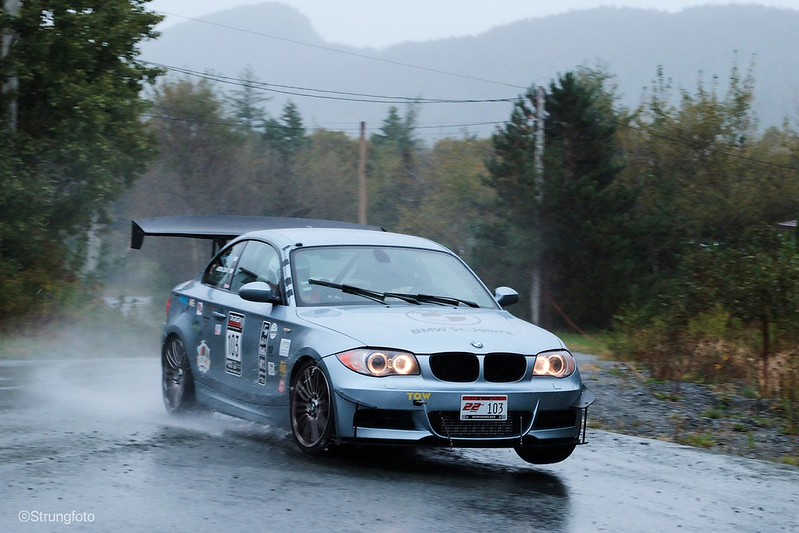
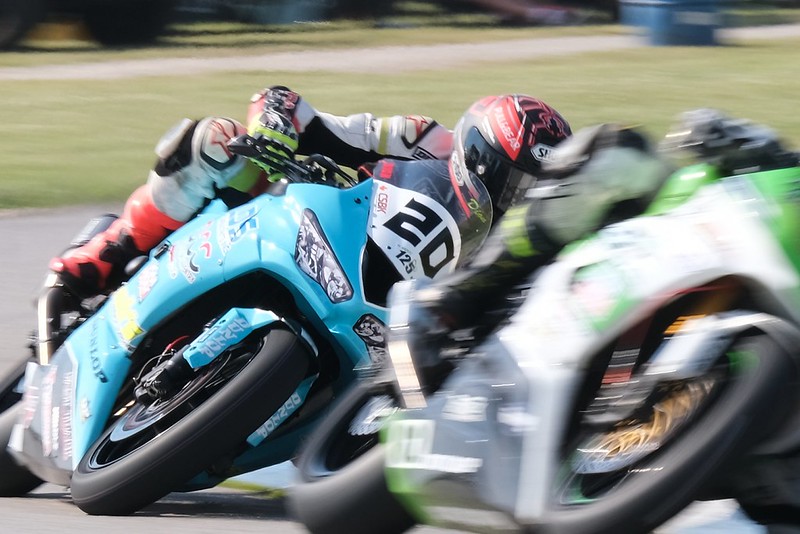
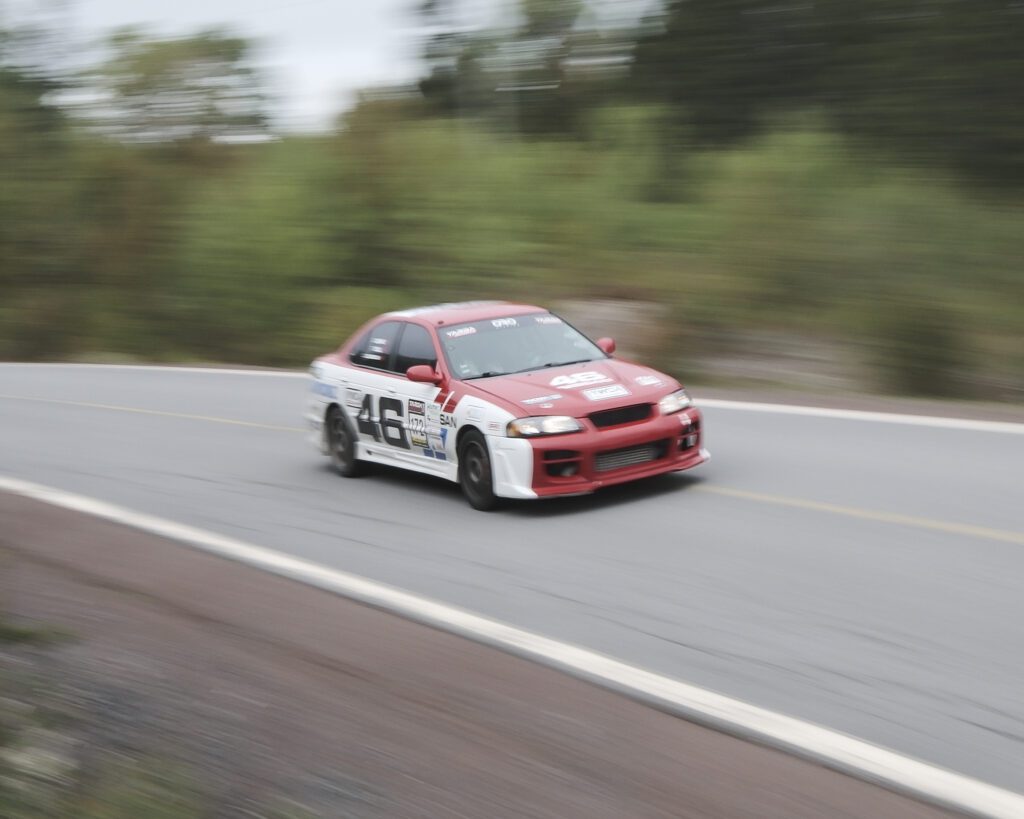
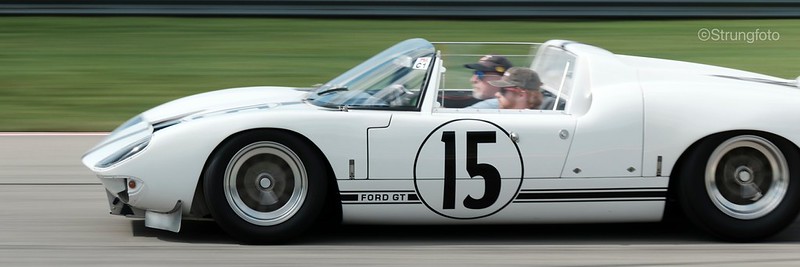
My favourite way to shoot is at slow shutter speeds and panning the cars in order to blur the background (and sometimes even render portions of the car out of focus) in order to give the “reality” of the cars moving at speed. The “hit” rate shooting this way is often poor. Out of 10 shots taken, I might end up with only 1 that is a useable image. Makes for tedious editing afterwards, but I think the results are worth it.
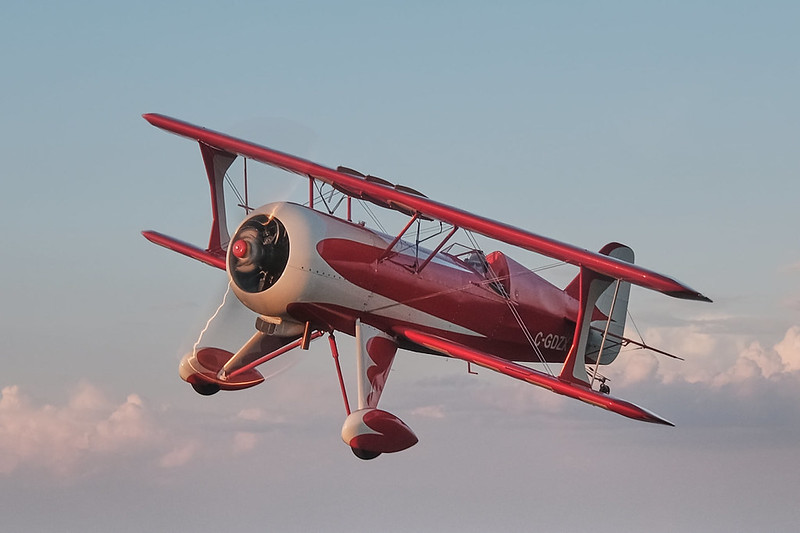
Similarly, when shooting airplanes, you need a slow enough shutter speed so the propeller is a blur. Did you ever make airplane models as a kid, and hang them from your bedroom ceiling by fishing line? They never really looked like they were flying because the propeller was never turning.
Any advice to enthusiasts who want to get shots of cars in action?
Learn how to shoot your camera in “manual” mode so you control the shutter speed and the lens aperture. Then practice, practice, practice. If you want to get good at panning, go out and shoot the track day events at a local racetrack. Lots of cars passing by offer a great opportunity to practice and refine your technique. Then when you come to an event like Targa, you stand a chance of capturing a good shot when the cars pass you by just once on a stage.
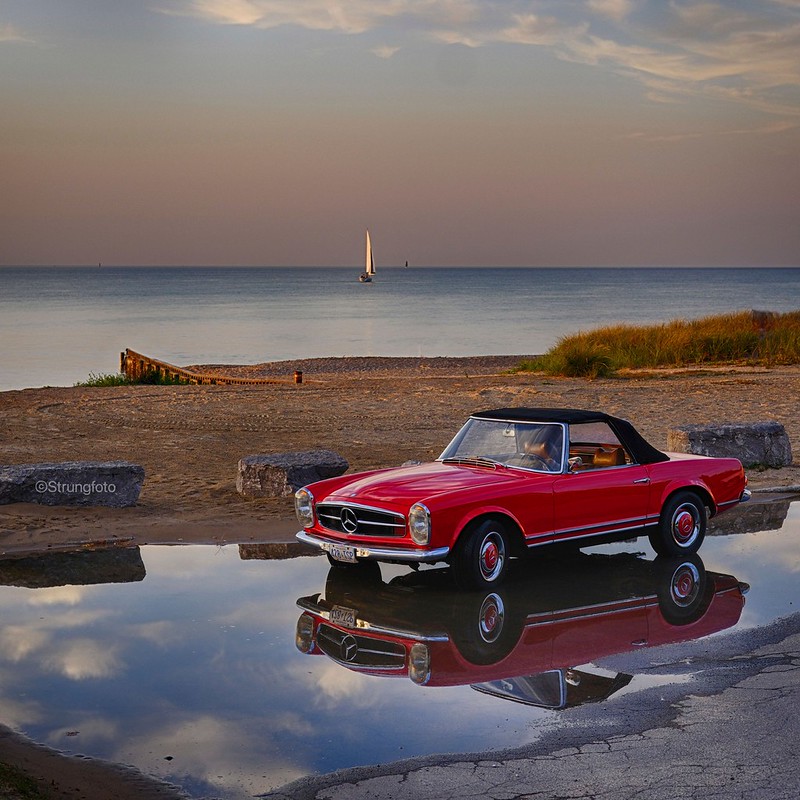
Here are links to some of Larry’s favourite images and his Flickr site: https://www.flickr.com/gp/96471247@N00/34H4655N41
Larry Strung’s albums | Flickr