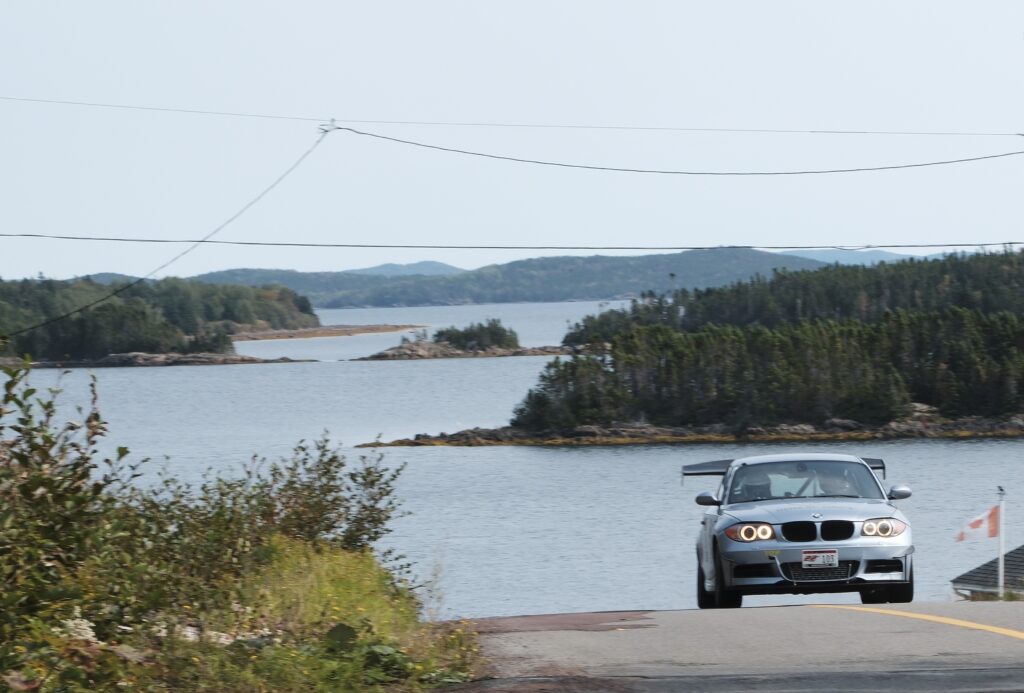
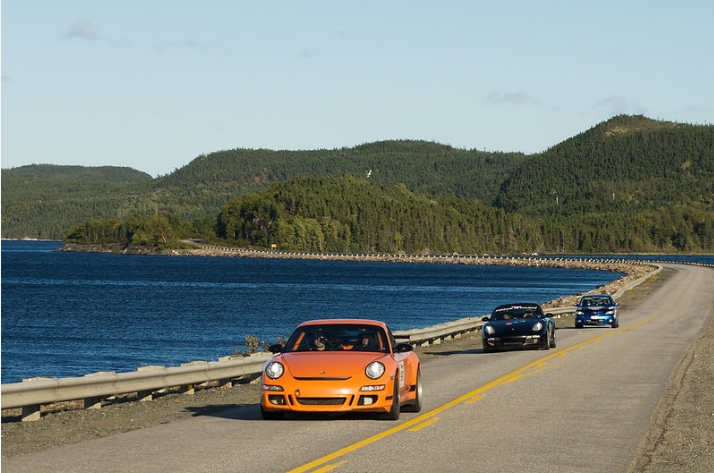
Husband + Wife Racing in the aptly named community of Pleasantview. (Photo: Larry Strung)
On Day 5 of Targa, teams will race through communities along Notre Dame Bay in Central Newfoundland. They’ll start the day in the former logging community of Glenwood on the Gander River, then proceed to stages in Bobby’s Cove, Pleasantview, Point Leamington, Leading Tickles and Glover’s Harbour before ending the day in Appleton.
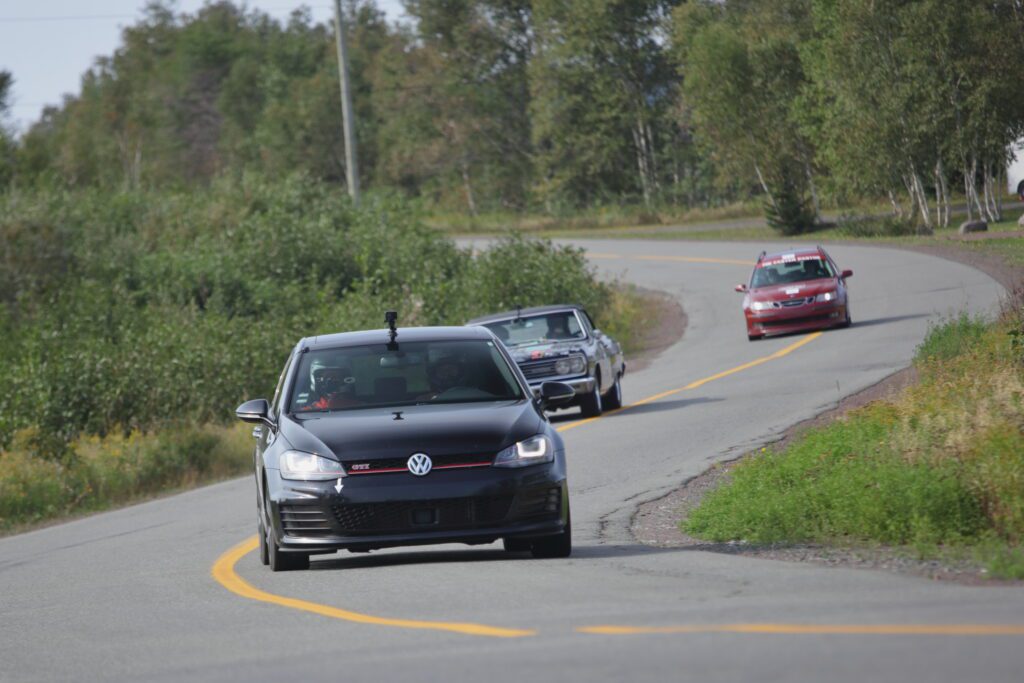
Teams in Targa Tour enjoying the winding roads along Notre Dame Bay. (Photo: Ralph Saulnier)
Glenwood, the second oldest inland community in Newfoundland, is located about 20 km from Gander. Glenwood is a playground for the outdoor adventurer. Surrounded by natural beauty, the town hugs the shoreline of the mighty Gander River and Gander Lake. The river is one of the world’s best Atlantic salmon fishing destinations. The vast boreal forest attracts hunters from far and wide. Nearby is Mount Peyton, a favourite attraction for tourists.
Natural beauty abounds in this area. For those who love the outdoors, Point Leamington has much to offer in the way of sport salmon fishing, boating, hiking, hunting, or snowmobiling in winter. For a relaxing drive “off the beaten path”, Point Leamington offers scenic views, relaxation and friendliness to all visitors. Local attractions include the marina and Rowsell’s Hiking Trail.
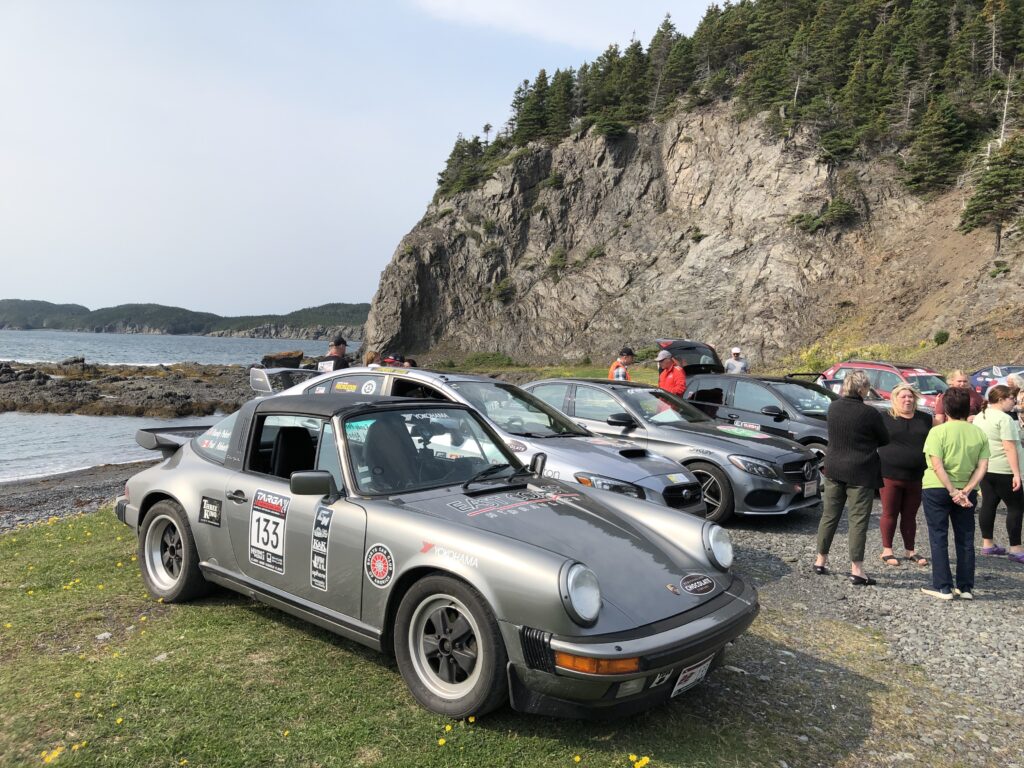
Car show on the beach at Leading Tickles.
Leading Tickles is a fishing community on the northeast coast of Newfoundland. Many of the residents work in the fish plant in the summer months. Local fishermen catch mainly cod, snow crab, and lobster, with some mackerel, herring, squid and capelin when regulations permit. Tourism is a big draw to this beautiful area in the summertime. The area boasts three beautiful beaches, hiking trails, and camping. Area cliffs and lookoffs provide views of whales as well as icebergs in spring and early summer. A tickle is a narrow saltwater strait, in case you were wondering.
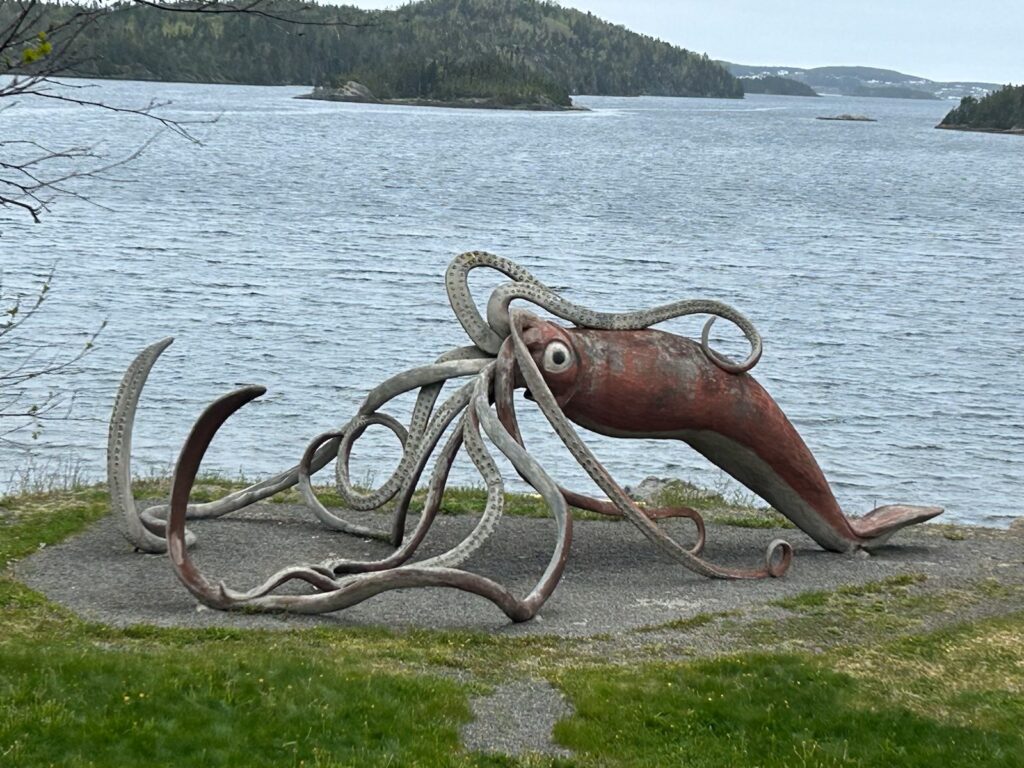
Glover’s Harbour, formerly known as Timble Tickles, was settled in the second half of the 19th century and has remained primarily a fishing village throughout its history. It’s famous as the Home of the Giant Squid. In 1878, a 55-foot-long giant squid washed ashore there and was subsequently recognised as a world record by Guinness. Glover’s Harbour has a small heritage centre and “life-sized” sculpture dedicated to the giant squid.
A sculpture of the giant squid that put Glover’s Harbour in the Guinness Book of World Records.
First settled in the late 1800s after a lumber mill started operations there, the Town of Appleton is located on the Gander River. You can enjoy a beautiful sunset against the water as people fish or you may see the dragon boats training. Running through the centre of Appleton is the Trans-Canada Trail, which you can walk, ski, snowmobile, or drive your ATV on depending on the season. The Riverfront Peace Park features artifacts and written histories from Appleton’s past including a four-metre piece of steel from the Twin Towers donated to the town for its role in taking in passengers from flights diverted after the 9/11 attacks in 2001.
Newfoundland Motorhead Racing Team blast by Riverfront Peace Park in Appleton. The park features a piece of steel from the Twin Towers in New York given to the community in recognition for taking in passengers diverted to Gander after the 9/11 attacks. (Photo: Ralph Saulnier)
Read more about these and all the other communities that host Targa here:
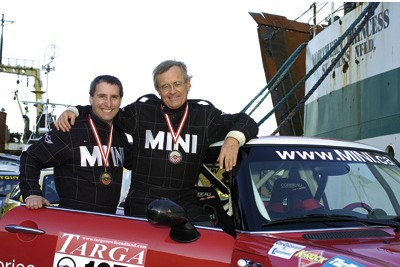
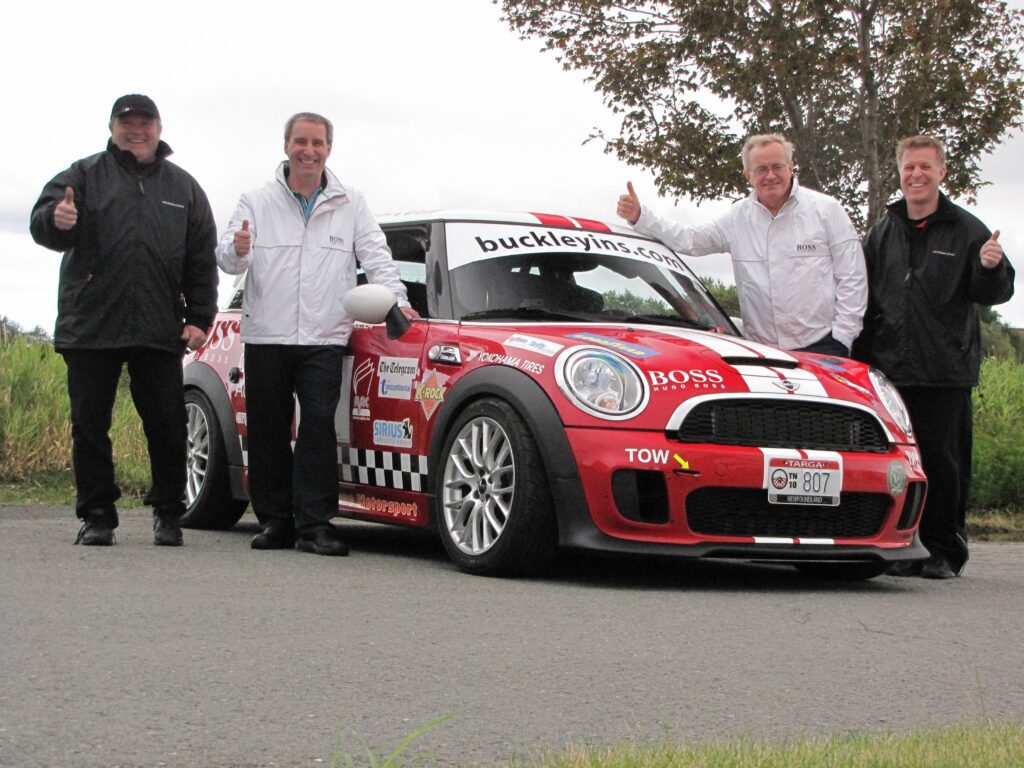
Brian Bourbonniere and Jim Kenzie following their second Targa Newfoundland win in 2006.
Winning any competitive division of the legendary Targa Newfoundland rally requires a combination of preparation, endurance, teamwork, concentration, and luck. Six gruelling days on the road covering 2000 km total distance and about 500 km of competitive stages puts every team and car to the test and winning typically comes down to mere seconds. Jim Kenzie, who has won Targa three times and also suffered DNFs, shares his wisdom.
My usual “first piece of advice” for Targa newbies is to remember there are no prizes for the Indy 495, the 23 1/2 Hours of Le Mans, or the 4 1/2 days of Targa Newfoundland. Another way of phrasing the oldest cliché in racing: to finish first, first you must finish. Targa’s history is littered with cars crashing out on the afternoon of Day Five. We won one of OUR titles that way!
Finishing and success are sometimes about the car. Everybody knows you have to look after the machinery. Make the car as bullet-proof as you and your crew know how to make it. Bring critical spare parts with you. That’s doubly important if you’re driving something exotic or rare. You’re not going to find a Maserati dealer in Leading Tickles, Newfoundland, and Amazon.ca can only do so much. Nut-and-bolt and fluid levels checks every night are critical. Same goes for proper allocation and rotation of the six tires. Cleanliness is next to godliness, which also makes the scrutineers’ jobs easier. There’s no point in pissing those people off!
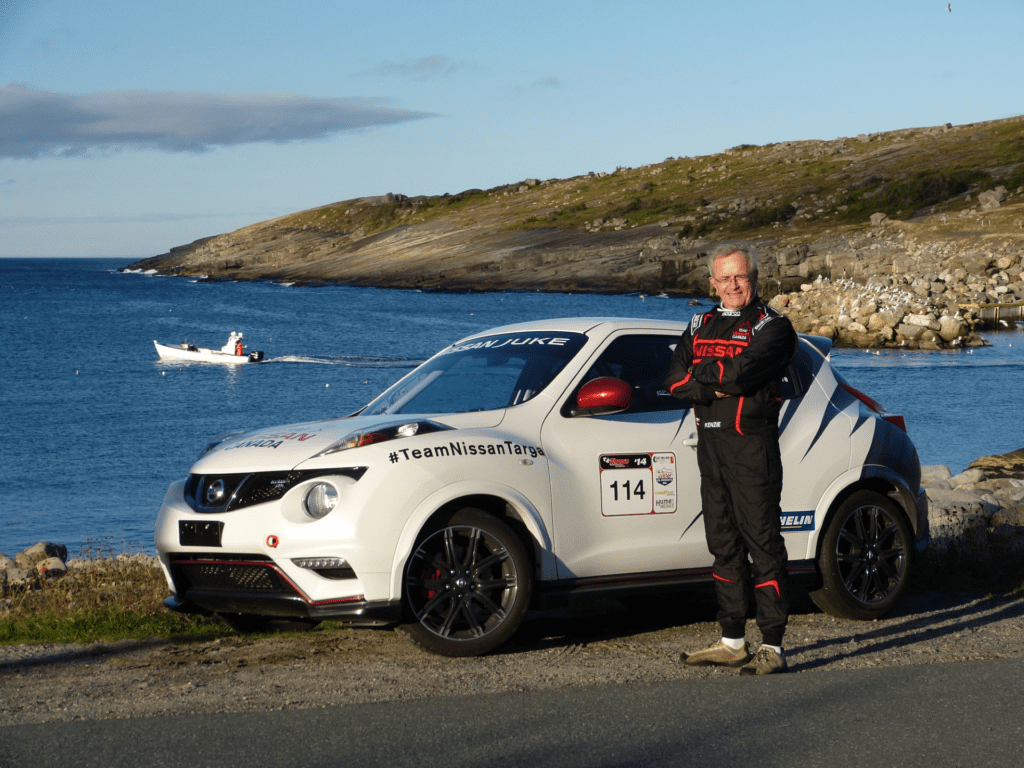
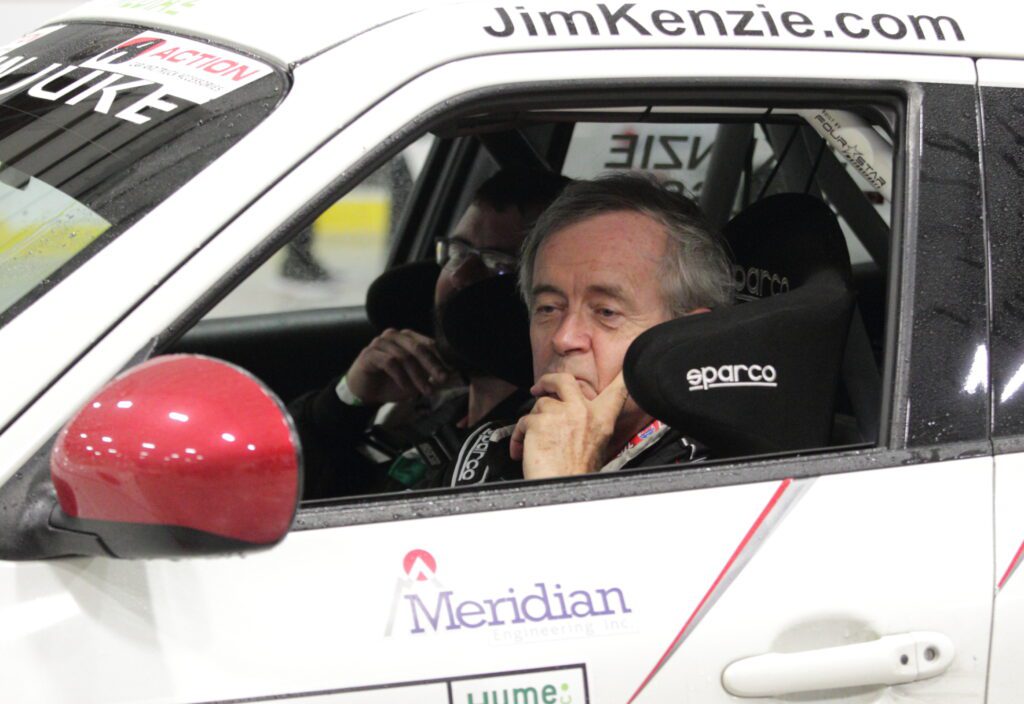
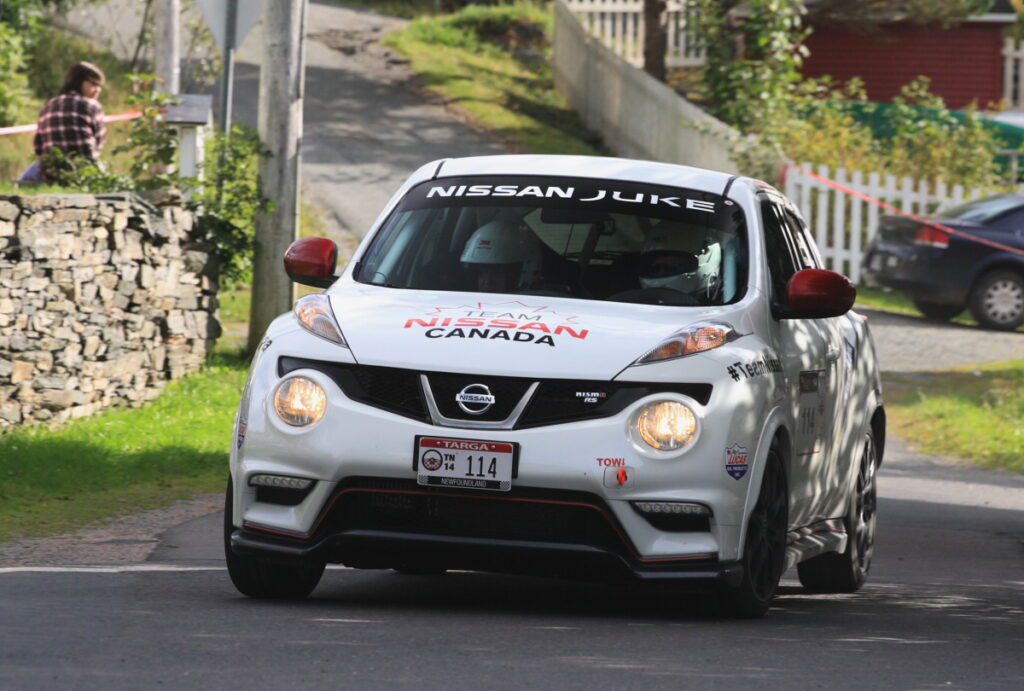
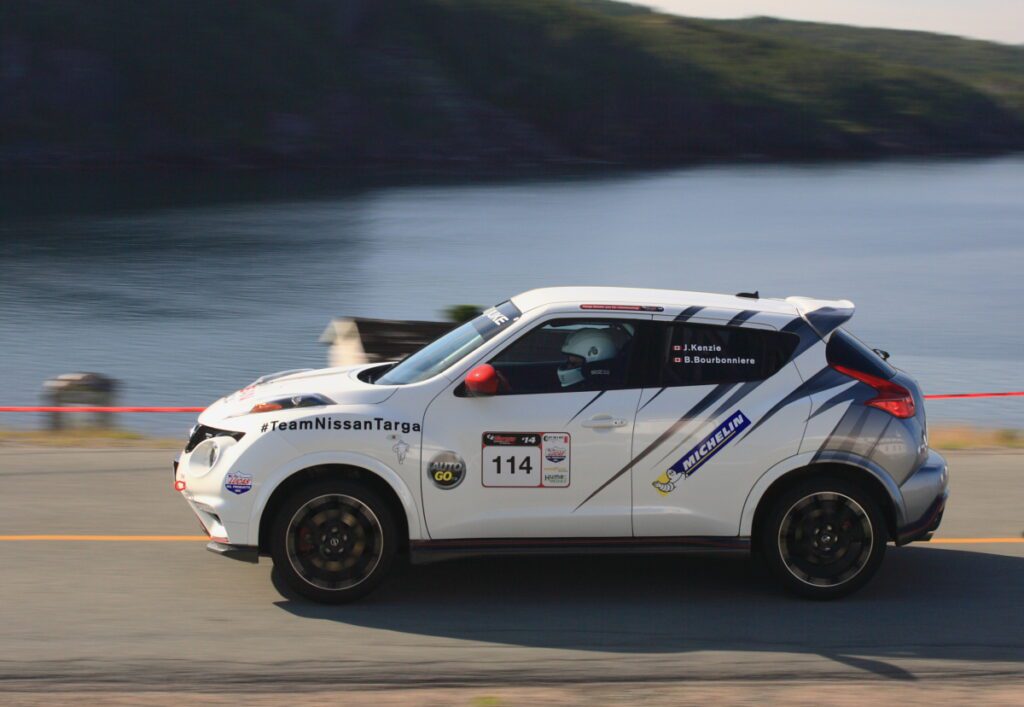
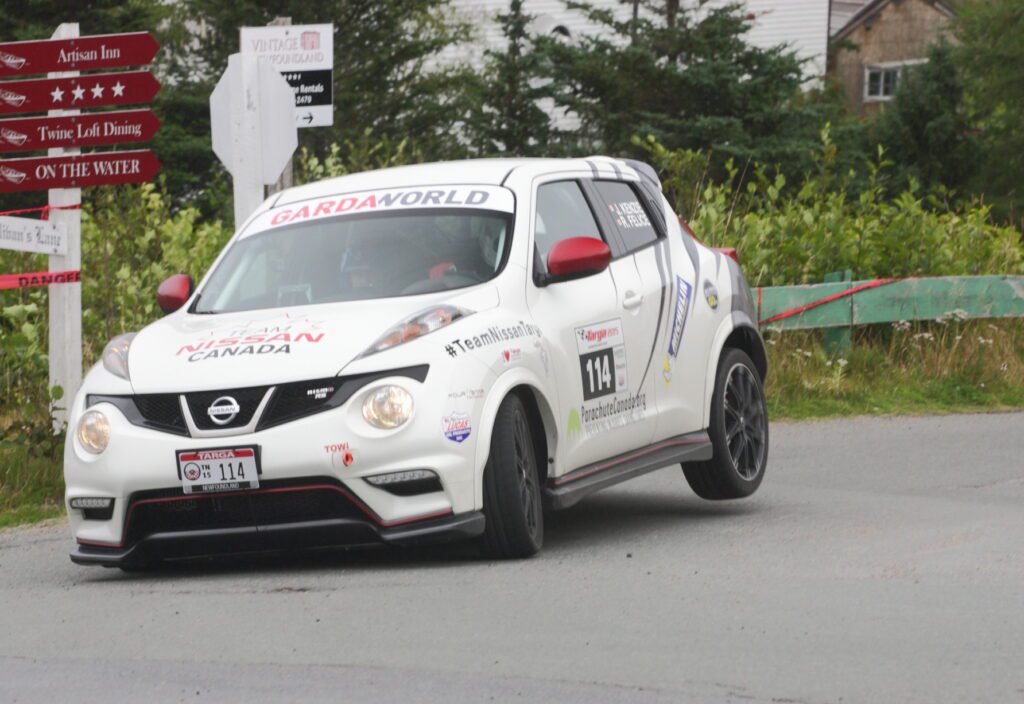
Targa co-founder Jim Kenzie with the Nissan Juke he entered in 2014 and 2015.
Sometimes it’s about the crew. That starts of course before you even leave home. What a lot of newcomers don’t understand, at least not fully, is the toll the stress of a week-long race has on the team. Both physical and mental. Not just on the driver and co-driver, but also on the service techs. Be as fit as you can be, which means starting some sort of fitness regime at least six months ahead of the event. Getting proper sleep during the week is critical for everyone, both for in-car and out-of-car team members. Yeah, that’s difficult; sometimes, an all-nighter is necessary. Been there, done that. Avoid alcohol and other “stimulants” during the week. Hold off on the celebrating until you’re on Water Street.
Sometimes it’s just knowing the rules! We won one of our titles because my co-driver Brian Bourbonniere knew the rules better than the “referees”!
Be REALLY nice to your CRO – Competitor Relations Officer. You might well need to rely on them at a critical juncture, and best to keep them on your side.
Likewise, be nice to the people of Newfoundland. If you have never been there before in a Targa or even on vacation (highly recommended, by the way) – you won’t believe how warm, friendly and welcoming Newfoundlanders can be. They are closing their roads so you can race on them! Would YOUR neighbours do the same in front of their houses? Yeah, you might not understand a word they’re saying once you get 100 klicks out of St. John’s (“Lard tunderin’ jaysus byes!”). Sure, you’ll find a few people who don’t want the event there. Be as civil as you can be, and don’t get into an argument with them, or remind them that Targa has brought millions of dollars to the province in gasoline sales, hotels, restaurants, etc. Yeah, tow trucks too. Again, been there…
Most important? ENJOY YOURSELF! It’s hard not to.
Jim wrote an auto/biography, In The Driver’s Seat, which includes a history of Targa Newfoundland. Find out more and order a copy here: https://www.facebook.com/jim.kenzie.
Check the Rules and Regs page for more details on what is required for each division. If you have more questions, visit our FAQ and Event Info pages or contact us at info@targanfld.com.
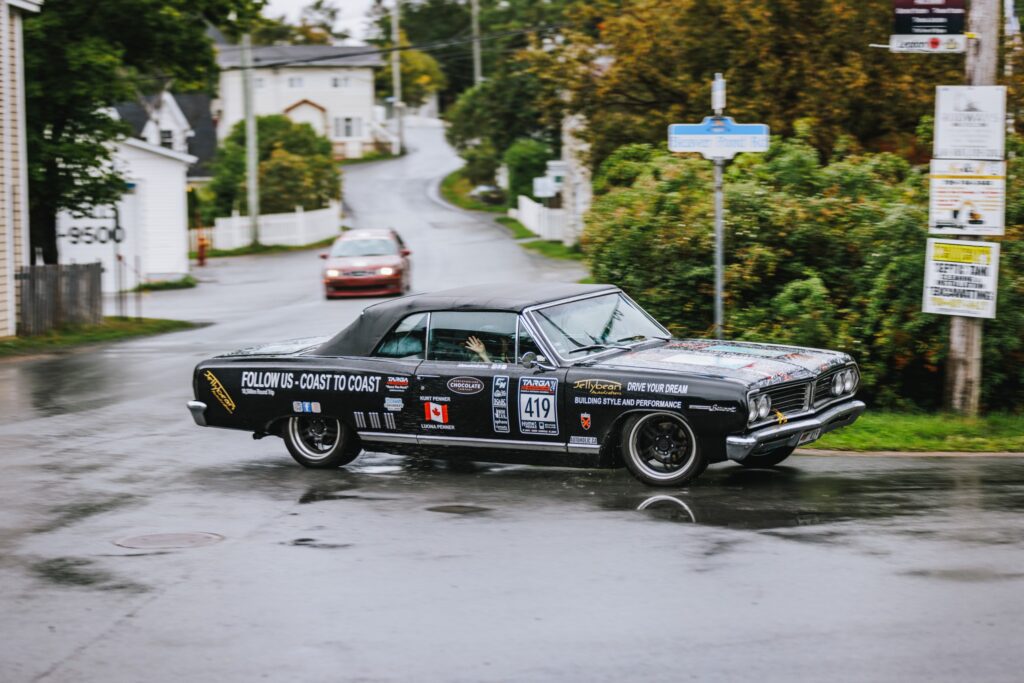
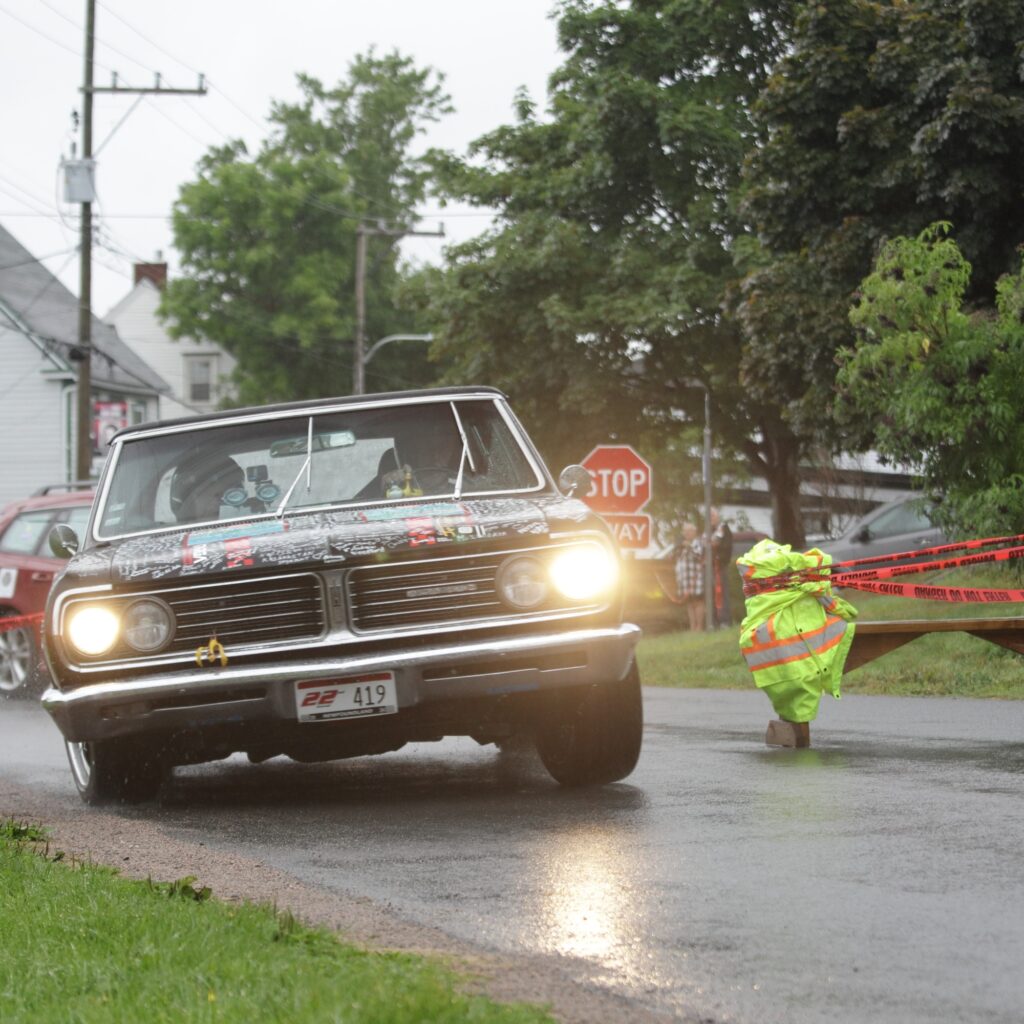
Team Jellybean in action through the narrow streets of Brigus. (Photo: Matt Myler)
Fan favourite Team Jellybean back for more Targa action
The Targa dream became a reality for Team Jellybean around 2021 when preparation for a very special 1966 Mustang belonging to James Murphy began. Dubbed “Unstabled”, this Mustang is poised to break out of any stable trying to contain it. In short form, it sports a handmade wide-body conversion to get some serious rubber in the fenders (and look cool), a complete custom chassis/suspension and 700 ponies under the hood. But we aren’t here to talk about that car. That conversation will be held soon though, as work continues to make it ready for Targa 2.
In the process of building this car, Kurt and his wife, Luona, got more and more interested in this epic race, and the decision was made to bring out their classic ’65 Beaumont convertible in 2024. The original plan had both cars being there, but many obstacles stood in the way of James’ Mustang making this event, so that plan didn’t materialize.
Team Jellybean manoeuvres through the chicane in Brigus. New suspension parts should help with that body lean this year.
Team Jellybean’s Beaumont is a car with a lot of stories to tell. Originally acquired in 1994, the car received a cosmetic restoration and few mechanical upgrades. It then spent the next 30 years as a daily driver and road trip car every summer. This meant seeing about 320,000 km or nearly 200,000 miles all over Canada and the U.S.
The year 2024 saw the car get a bit of a transformation as the stock 14” wheels and hubcaps were swapped for 17” Forgelites and a proper set of tires. A rollbar was added, along with a set of proper seats and seatbelts. Add in a sticker package that is visible from a mile away, and the car was set for an unbelievable adventure: Driving from the west coast of Canada all the way to the east coast, participate in Targa, and then drive it back – 19,000 kms in under six weeks. That got us the “Spirit of Targa” award, which we are quite proud of. We also got another award, which saw us become the caretakers of Terry the Targa Puffin, but that’s another story.
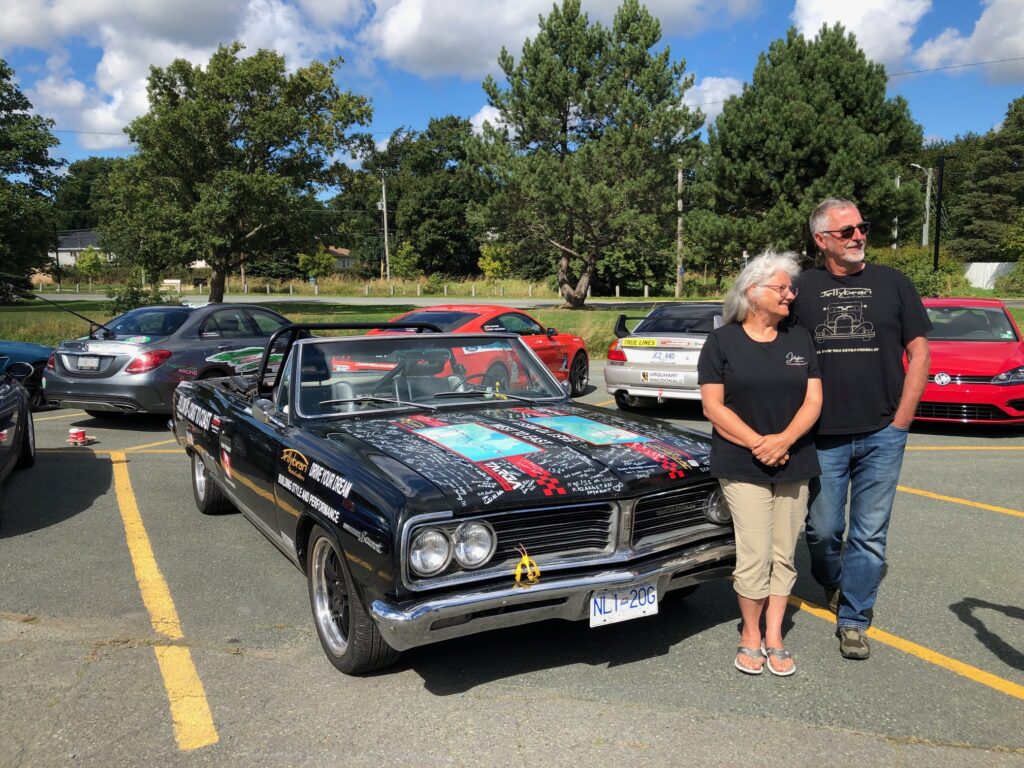
Kurt and Lu Penner prior to the start of the rally.
So lets talk about 2025. Unfortunately, obstacles still stand in the way of Team Unstabled and their amazing ’66 Mustang, so the decision was made to join forces and come out with the Beaumont again, but this time step up to Targa 1 and see what the old ragtop can do there. James Murphy signed up as co driver, which will give him a better picture of what to expect when he does come for Targa 2. Meanwhile the Beaumont also needed to step up the game to compete. Speedtech front suspension went in to replace the stock stuff, and skid plates are being added (learned that lesson last year) as well as a bit of extra power.
James comes from a drag racing background, so Targa will be a new challenge in focus and endurance. He is well versed in pushing his limits and competing in a tough field, running a construction company that has won some of the top awards in his industry. He is no stranger to committing to a task and excelling at it.
Kurt is a lifetime car enthusiast who runs Jellybean Autocrafters, a shop that builds some pretty special rides. Jellybean Autocrafters is a show-winning performance car builder and restorer in Langley, British Columbia. His happy place is behind the wheel of a car on a twisty road, or in the shop shaping metal panels, but he is hoping not to have those two worlds come together at Targa.
Officially James will be tasked with giving orders, and Kurt’s job is to stay on the pavement this time. We are looking forward to stepping up to something a bit more competitive, see you all there!!
About the Car– 1965 Beaumont Sport Deluxe Convertible
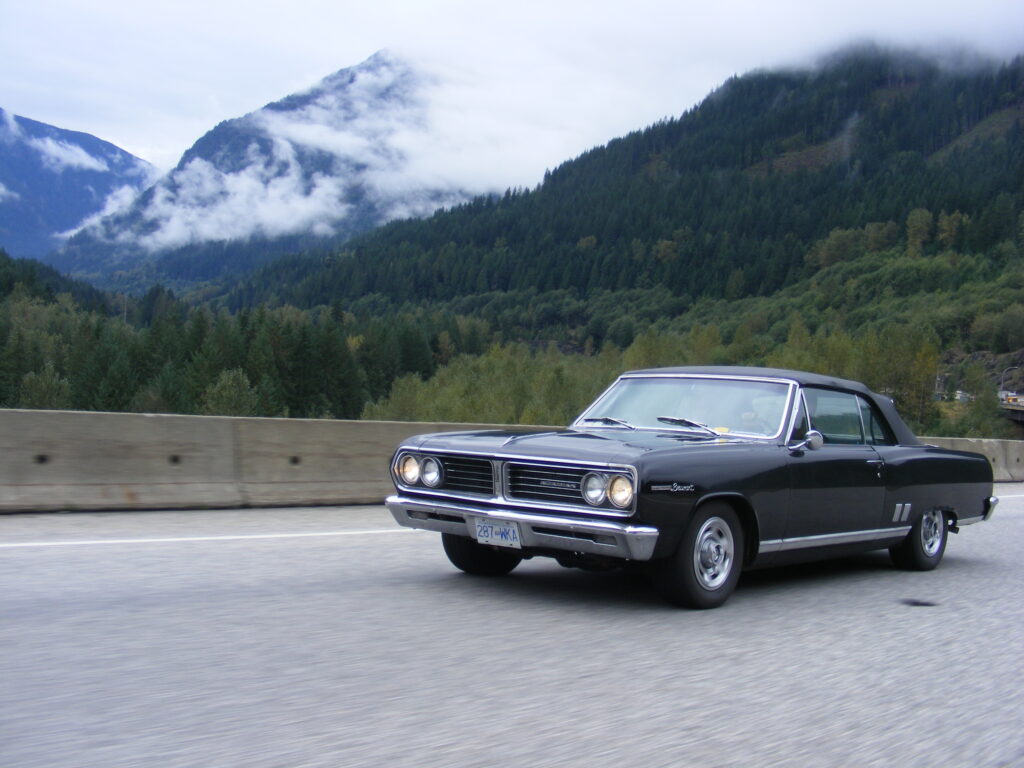
The Beaumont in stock form prior to the Targa decals and signatures on the hood and trunk from fans across the country. (Photo: Team Jellybean)
The Beaumont is a Canadian built car, one of approximately 400 built as SD convertibles by General Motors. In 1964 and 1965, GM of Canada sold an “Acadian Beaumont” based on the Chevelle A-body platform. Beaumonts were sold at Pontiac-Buick Dealers primarily for the Canadian market.
While the Penners’ car appears mostly stock, Kurt did a number of upgrades such as disc brakes, quicker ratio steering and suspension mods to improve drivability and handling.
“This is one of our primary vehicles we use to demonstrate how reliable a classic car can be,” says Kurt.
Along the way and throughout Targa, people crowded around the car asking the couple questions about their adventure and signing the hood, which will be mounted at the Jellybean shop. The Penners and their car also attracted a lot of media attention such as this story on CBC TV: This Targa driver dipped his car’s wheels into the Pacific ocean | CBC.ca
“Targa has been one of the most amazing things I’ve ever done,” says Kurt. “The roads that we’re running, the scenery, the people of Newfoundland … everything is just unbelievable. It has been a fantastic experience.”
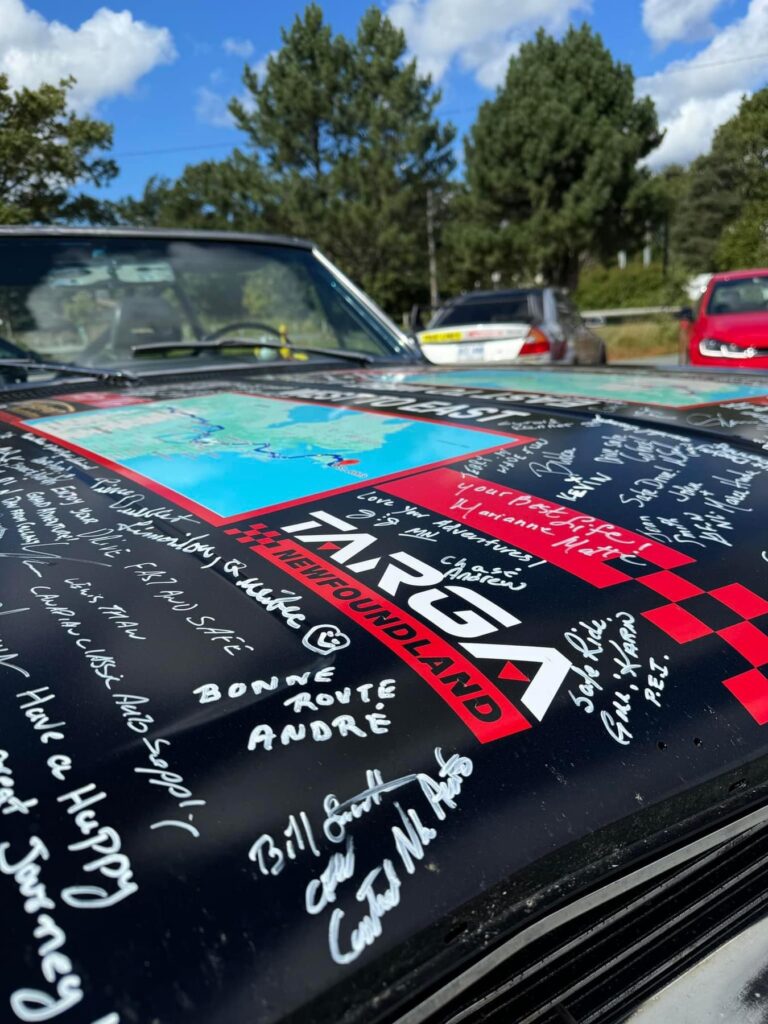
Some of the signatures on the hood of the Beaumont.
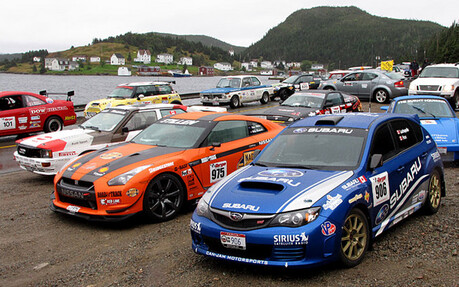
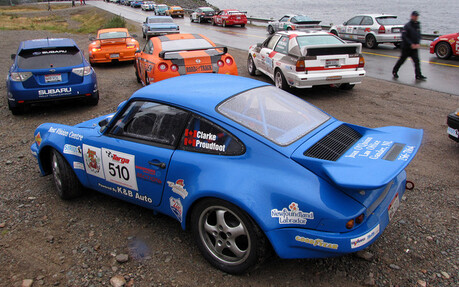
A wide variety of high performance and vintage cars competed in 2009. (Photo: The Car Guide)
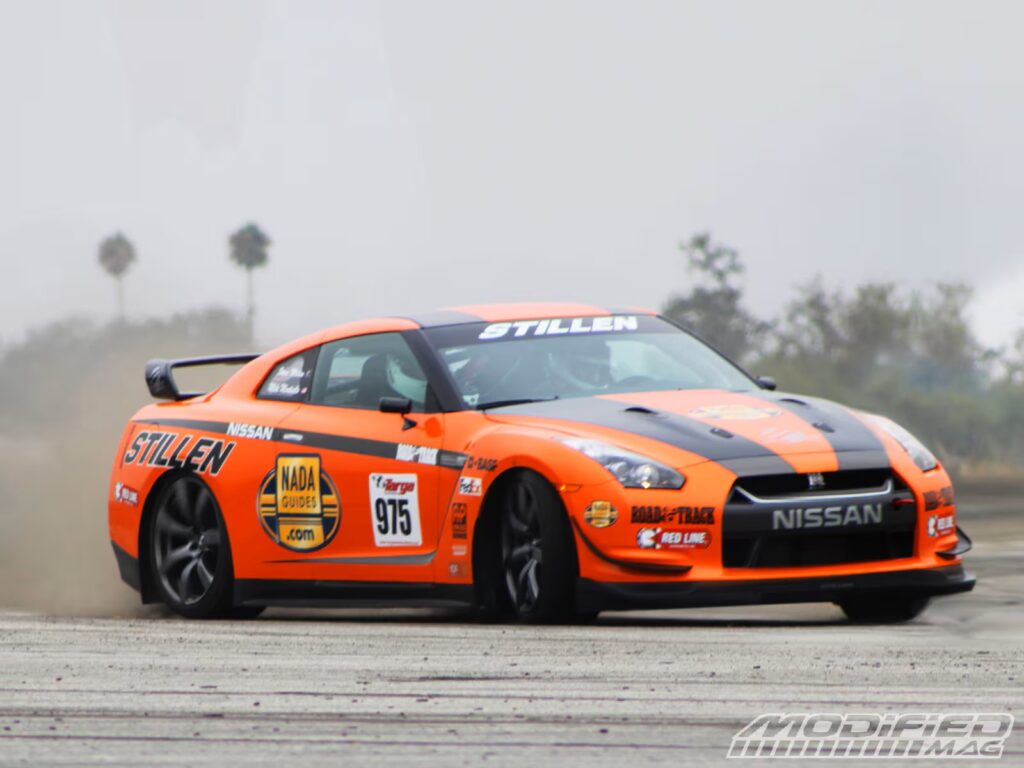
The year was 2009 and Targa attracted 60 teams and cars, including some heavy hitters, even Godzilla.
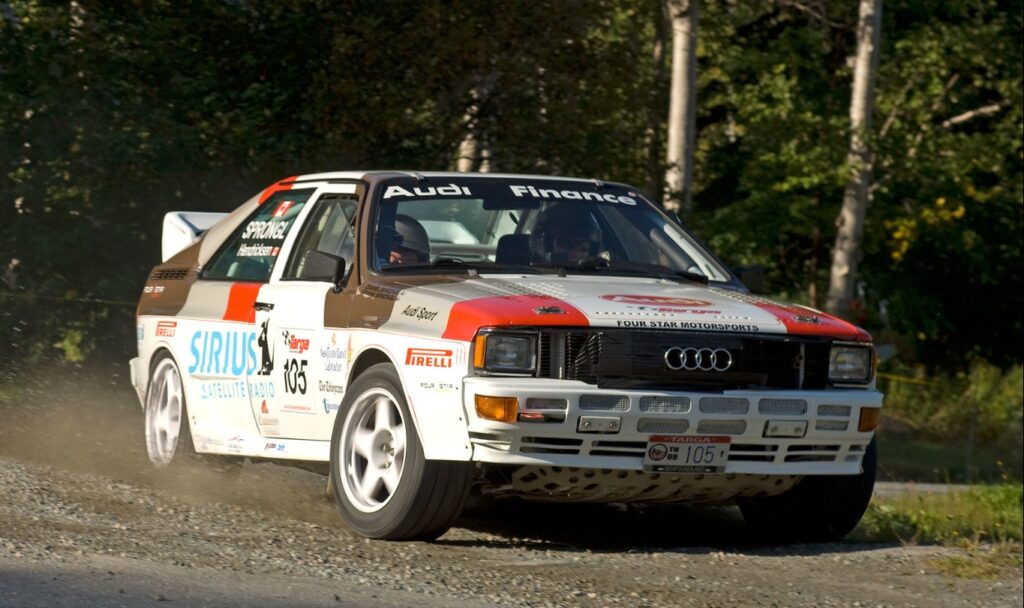
Frank Sprongl and Rod Hendricksen sliding their way to an Open Division win. (Photo: Warwick Patterson)
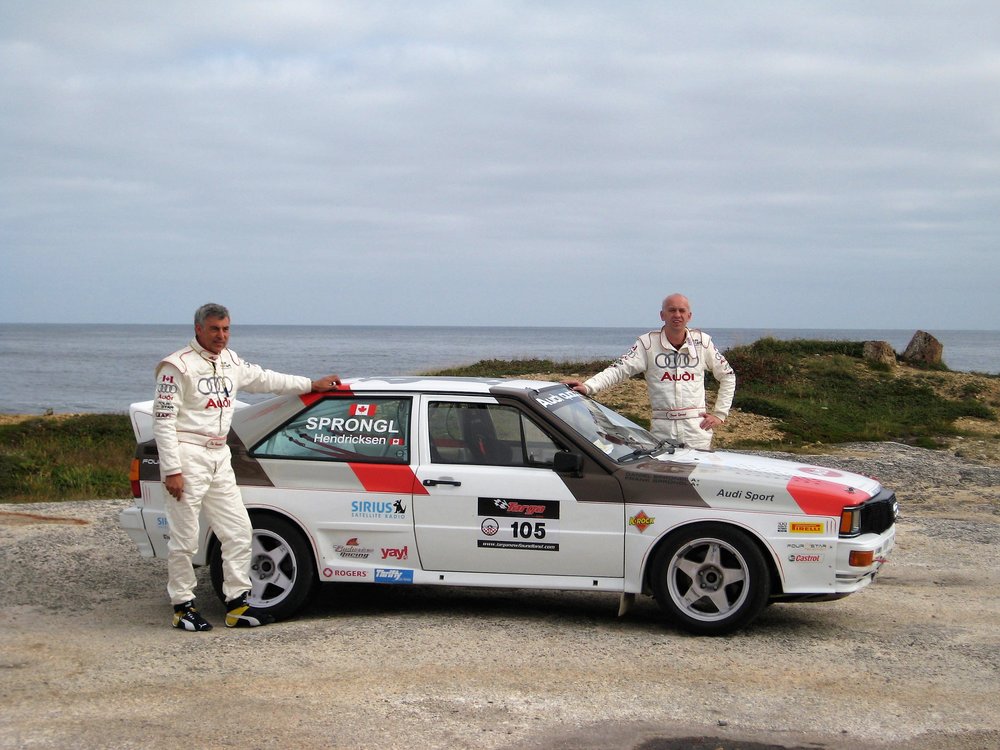
The team of Frank Sprongl and Rod Hendricksen became two-time Open Division champs in a 1983 Audi Quattro (see photos above and below). Sprongl, a renowned champion rally driver and car builder along with his brother Dan, is one of only a handful of drivers who have achieved Grand Master status in the Canadian Association of Rally Sport and a member of the Canadian Motorsport Hall of Fame. Hendricksen was also a Canadian Rally Championship winner as a co-driver.
Sprongl and Hendricksen pose with their speedy steed. (Photo: Four Star Motorsports).
TSN in Canada ran a Targa special you can view here. Speed TV (remember them?) aired a Targa show the following year.
IMSA racer Steve Millen and Mike Monticello from Road & Track magazine brought Godzilla to Targa. (Photo: Modified Mag)
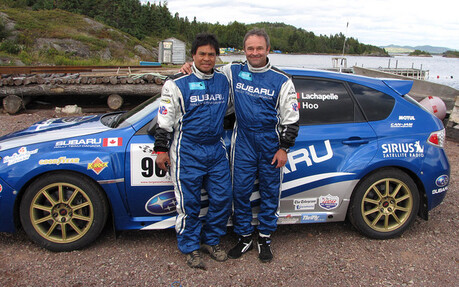
Subaru Rally Team entered Targa with journalist Marc Lachapelle from The Car Guide magazine behind the wheel along with replacement co-driver and chief mechanic Stewart Hoo. They came second in Modern Division behind the GT-R and won the 2009 Churchill Motorsports International Team Trophy. Lachapelle, who ran Targa multiple times, wrote about the experience. Keith Tanner of Flyin’ Miata and a past Targa competitor also wrote blog posts about the rally.
Marc Lachapelle and Stewart Hoo had a solid result in Modern Division. (Photo: The Car Guide)
In the Classic Division, Roy Hopkins and Adrienne Hughes made it three class wins in a row in a 1969 BMW 2002. Grand Touring was won by Ferdinand and Christoph Trauttmansdorff running a 1990 BMW 325i while Alan Kearley and Greg Martin in a 2004 Mazda 3 Sport GT took their second of what would become three titles in GT (unequipped).
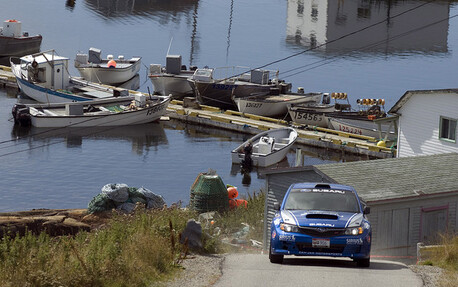
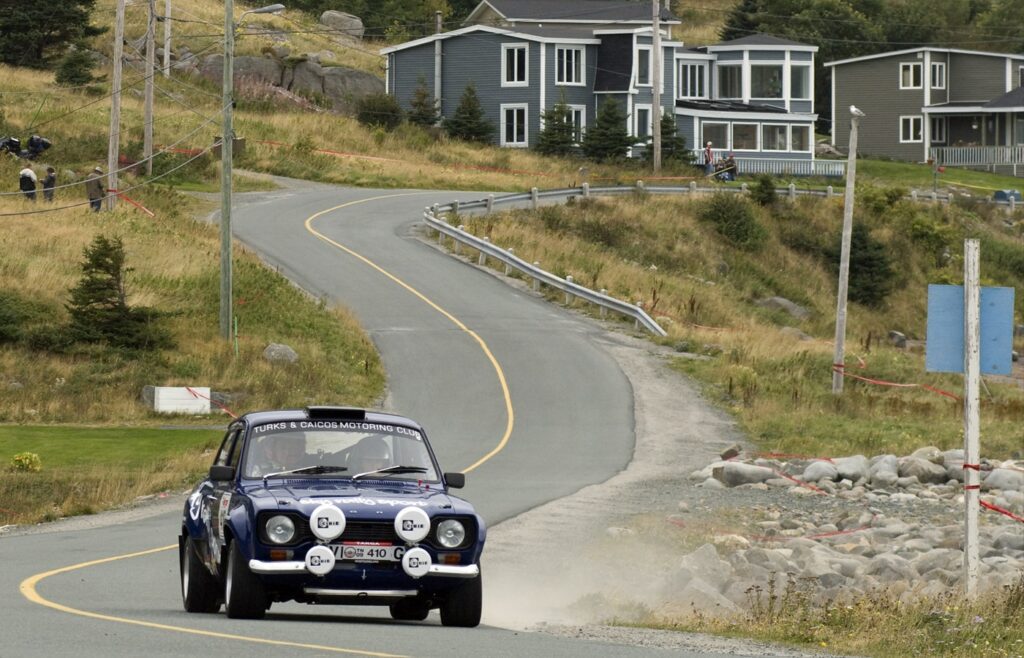
A wide mix of cars and teams challenged The Rock. (Photo: The Car Guide)The Subaru in action. (Photo: The Car Guide)Photo credits: The Car Guide (Subaru STI), Four Star Motorsports (Audi Quattro), Warwick Patterson (Audi on the road, Ford Escort, Stillen GTR and cars on causeway)
Check the Rules and Regs page for details on what is required for each division. If you have more questions, visit our FAQ and Event Info pages or contact us at info@targanfld.com.
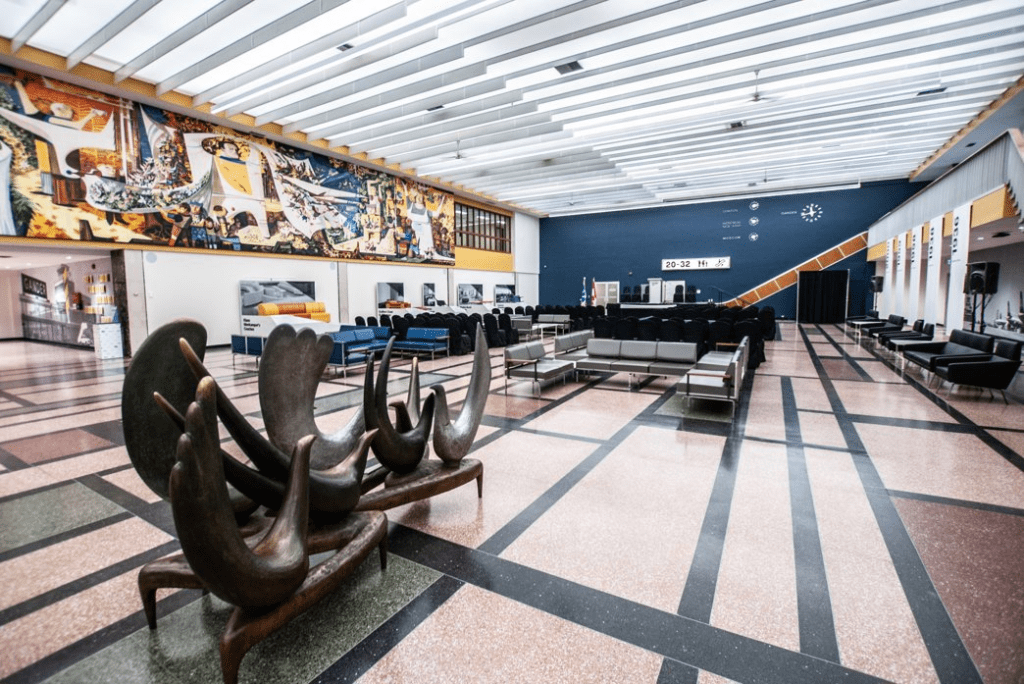
The International Lounge in the Gander airport, which has witnessed considerable aviation history.
The second leg of the rally concludes in the twisty streets of the Town of Gander in Central Newfoundland. This is one of the favourite parts of the rally for competitors as they navigate the residential streets with hundreds of cheering spectators lining the course.
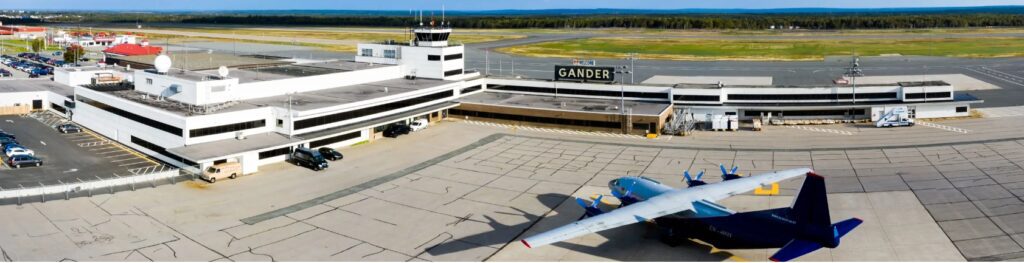
Gander was once known as the “Crossroads of the World” due to its perfectly positioned airport. Once the largest on earth, with runways big enough to land the space shuttle, it was a strategic location for refuelling and a bustling centre during wartime. Celebrities such as Frank Sinatra and world leaders including Fidel Castro stopped there.
The airport made this community the focal point for human kindness and generosity as highlighted in the hit Broadway play Come From Away. Gander’s airport hosted 38 planes, carrying about 6,600 passengers, after they were forced to land in Canadian airspace after the terrorist attacks on Sept. 11, 2001. The people of Gander and surrounding communities took them in and formed lasting bonds with these unexpected visitors. Come From Away is performed throughout the summer at the Joseph R. Smallwood Arts & Culture Centre.
Come From Away has enchanted audiences around the globe. The musical is staged throughout the summer in Gander. (Photo: Chris Crockwell/Come From Away)
Gander has a population of 12,000 people and is also a service centre to surrounding communities and approximately 80,000 people. The town is home to 9 Wing Canadian Forces Base (CFB) Gander, which includes 103 Search and Rescue Squadron. The North Atlantic Aviation Museum celebrates Gander’s rich aviation history by preserving and presenting stories and artifacts highlighting the town’s role in the development of Trans Atlantic Aviation.
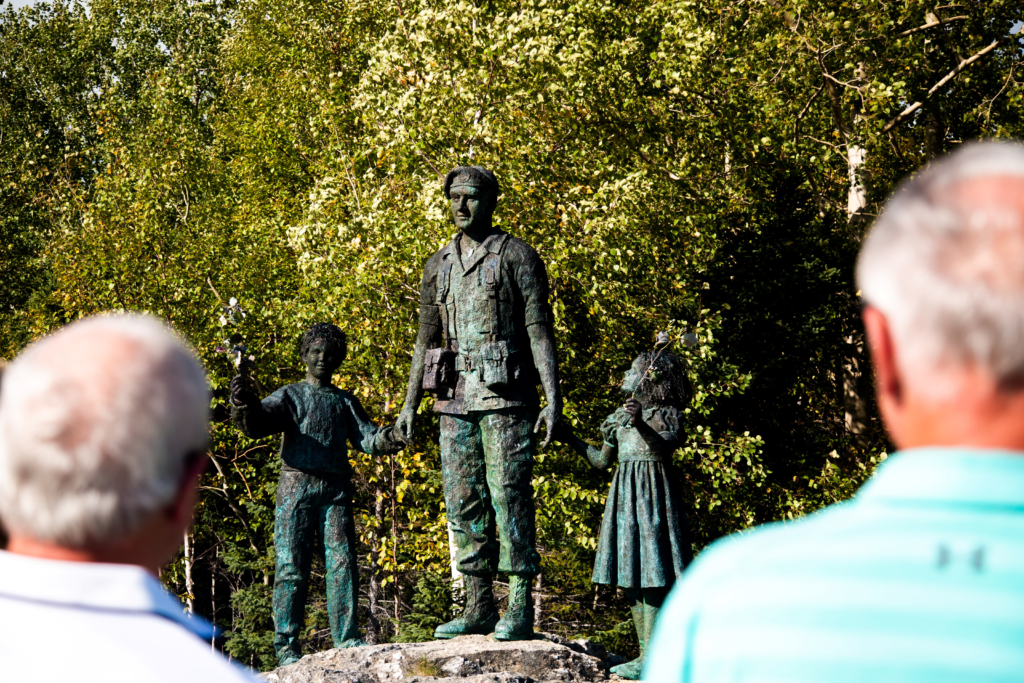
The Silent Witness Memorial is located in a tranquil park dedicated to the memory of the 256 individuals from the U.S. 101st Airborne Division who lost their lives on December 12, 1985 in the Arrow Air Crash.
The Silent Witness Memorial is a tribute to the Americans who lost their lives in the Arrow Air Crash. (Photo: Town of Gander)
Targa co-founder Jim Kenzie with the Nissan Juke he entered in 2014 and 2015.
Whether you are a Targa veteran or new to the rally, the key to having a successful event lies in the preparation before you turn a wheel. Who better to give advice on that than automotive journalist, Targa co-founder and multiple winner Jim Kenzie. The original version of his article appeared in the Wheels section of the Toronto Star.
What kind of car can compete in the Targa Newfoundland rally?
Chances are if it has four wheels, we’ve seen its like in the 23 years of this unique-to-the-northern-and-western-hemispheres event.
There’s been everything from a 1938 Alfa Romeo Mille Miglia Spyder to a Citroen Traction Avant (the French gangster car), to a Mercedes-Benz S-Class Sedan, to the other end of the Mercedes-Benz model spectrum, a tiny little Smart car, to the more usual suspects like Porsche 911, Ford Mustang, Chevrolet Camaro, Mini, Subaru WRX, Mitsubishi EVO. Even a 1971 Chevrolet Silverado pickup truck entered one year.
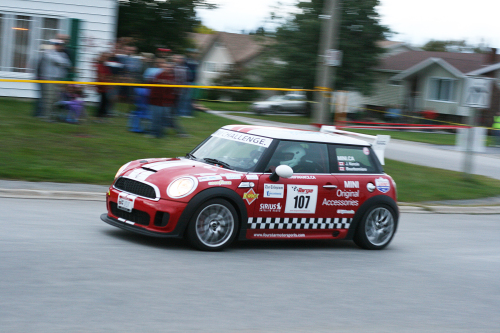
Jim Kenzie and co-driver Brian Bourbonniere won three times in well-prepared MINIs.
How do you prepare a car for this gruelling six-day, 2000-plus km event?
If you are running in the Targa Tour division, you pretty much just have to pump up the tires and do the requisite calculations for average speed, etc. on your phone. In contrast, Grand Touring means installation of a rally trip computer which keeps track of your distances, times and speeds to a fraction of a click/second. (You also need a roll bar for safety in Grand Tour and Targa 1.)
Now, if you plan to run in the Targa 2 division, the high-speed category, it is a somewhat larger kettle of fish…
How much should you budget?
It’s sort of like the income tax form:
1. How much money do you have? $_____.__
2. Spend it.
Minimally, you have three sets of criteria to satisfy.
The first two — (a) Make it legal, and (b) Make it safe — are mandatory.
The third — (c) Make it competitive — well, that’s where it gets interesting.
I have known people who spent less than $20,000 to prepare a safe and legal Targa car. Competitive? Hardly. And that low cost level can be achieved only by doing a huge amount of the work yourself (assuming you know how) and enlisting friends and family as crew.
I have also known people who have put six figures into a Targa run, with none of those figures to the right of the decimal point.
In all cases, it was well worth it.
I wouldn’t tell you what the budget was for the 2014 Nissan Juke NISMO RS Turbo that Nissan Canada entered for me, even if I knew.
But through the words of Frank and Dan Sprongl of Four Star Motorsports in Georgetown, Ont., who have built and/or prepared all but one of my 14 Targa rides, I can at least outline what went on.
Said Frank, “We take all the stuff out, and put all the stuff back in.”
Okay, he didn’t exactly say “stuff,” but you catch my drift. And that jocular little summary greatly simplifies the detail that is involved.
By far the biggest component, both in cost and in time, is the roll cage. And this is not an area where you want to scrimp.
When I first met my co-driver, Brian Bourbonniere — my original co-driver in Year Three had fallen ill and four-time Nova Scotia champion navigator Bourbonniere jumped in to help — he looked at the car and said, “Oh, it’s a Sprongl cage. At least I’m unlikely to die!”
Frank and Dan were long-time and very successful competitors on the Canadian national rally scene and have built a lot of strong and successful cars. That gave Brian the confidence to climb in.
The first step in building the cage is “taking all the stuff out.” The doors, tailgate and windshield are removed, and the interior stripped.
Says Frank, “Every modern car has pretty similar crash structure. Through years of experience building these things — and seeing how they perform when something goes wrong on a rally — we have a pretty good idea of where to put the reinforcements.
“We use 4130 chrome-moly steel and have our own tube bender. We measure every piece and cut and weld them into place. It’s all about triangulation, putting the strength where it’s needed.”
Dan sourced some Sparco racing seats that were narrower than usual; neither Brian nor I am particularly broad of beam, so we fit nicely in them. These seats have big side panels on the upper back rests to protect the head against side impacts and roll-overs — been there, done that. Five-point harnesses complete the major safety pieces.
The TerraTrip rally computer was installed, then most of the interior was replaced — although the rear seat was removed and some trim bits sacrificed to fit the cage.
The finished car looked remarkably stock, apart from the cage and seats. We even kept the air conditioning, satellite radio and backup camera. Sure, several hundred kilograms of weight could have come out of the car, but some of those transit stages are long and hot.
But you can never be too thin, too rich, have too much horsepower or too good a suspension. So, for 2015, Dan built some adjustable suspension units, beefed up the brakes and re-jigged the intake and exhaust systems to give a few more ponies. Michelin Pilot Sport PS2 tires were our rubber of choice.
Jim and Brian at speed in their MINI through the streets of Gander. (Photo: Ralph Saulnier)
A test day at Toronto Motorsports Park showed that the car was indeed quicker, the brakes were epic, and it was much easier to drive hard. Compared to a Targa-bound Mitsubishi EVO IX which was also testing that day, we were giving away about 100 horsepower and two driven wheels — the Juke is front drive; it’s four-wheel drive — yet our lap times were only 2.5 seconds slower than the EVO.
Even with better go, better stop and better cornering, we weren’t able to add to the three Open Division championships we’ve racked up over the years.
But we think we gave a decent account of ourselves.
Jim wrote an auto/biography, In The Driver’s Seat, which includes a history of Targa Newfoundland. Find out more and order a copy here: https://www.facebook.com/jim.kenzie.
Check the Rules and Regs page for more details on what is required for each division. If you have more questions, visit our FAQ and Event Info pages or contact us at info@targanfld.com.
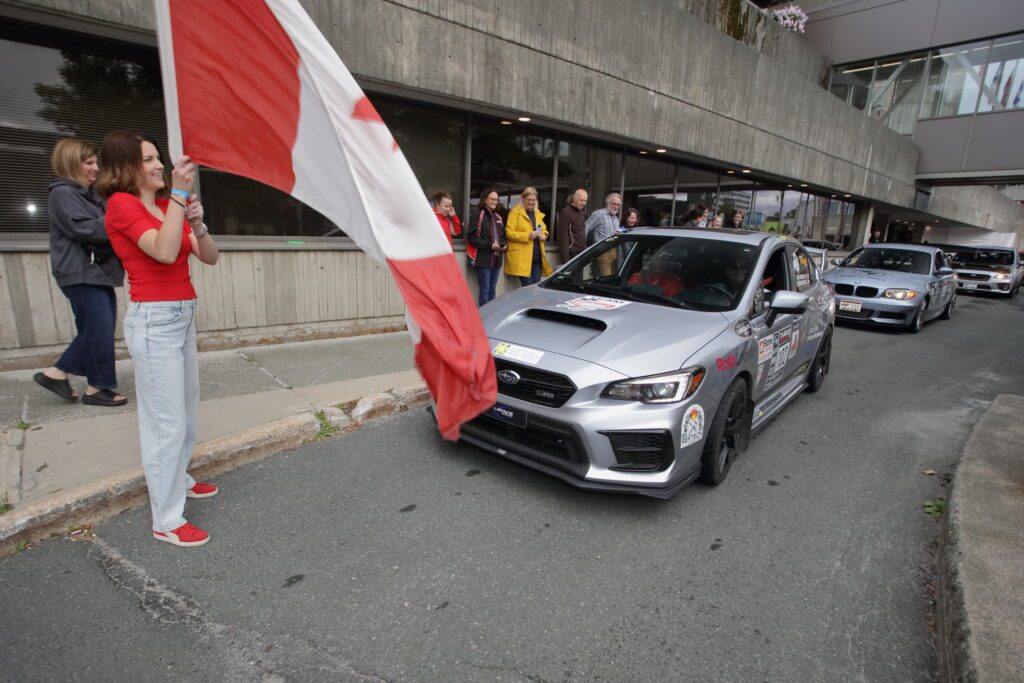
Targa teams roll off the start line at St. John’s City Hall in 2024. (Photo: Ralph Saulnier)
Targa Newfoundland is made up of four distinct divisions. There are three competitive divisions – Targa 1, Targa 2, and Grand Touring – and one non-competitive division, Targa Tour. Targa 1 and 2 divisions are further grouped by two-wheel and all-wheel-drive vehicles made before or after the year 2000.
Targa 1 is a competitive, timed event for cars with a roll bar. A base time is set for each stage with the goal to beat that time without any penalties. You are penalized for being slower than the base time for your class and road condition.
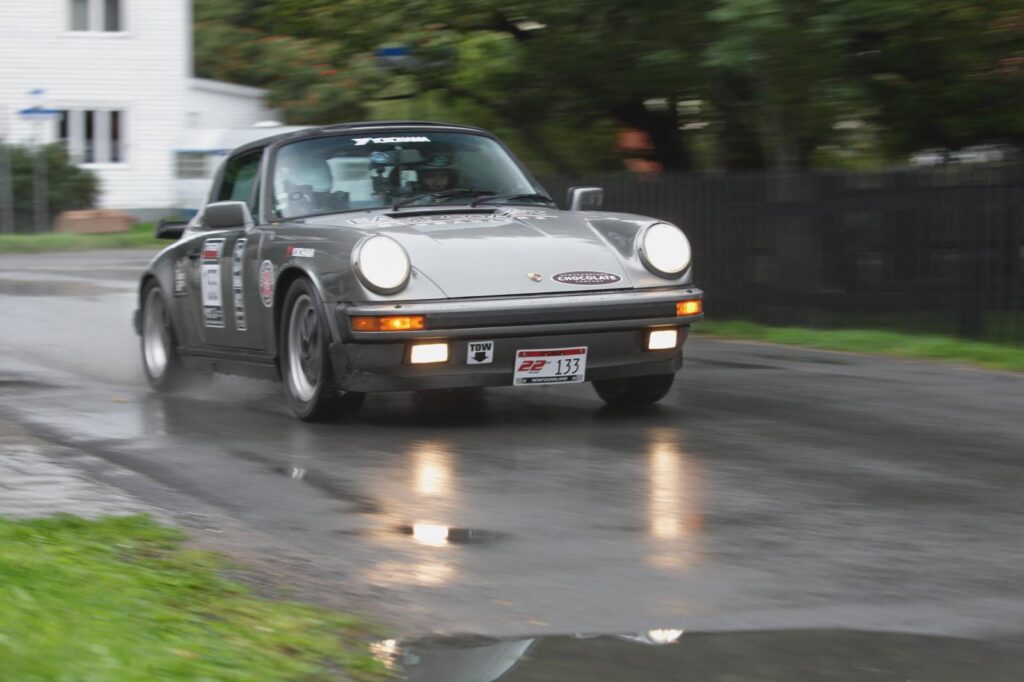
The team of Randy Pobst and Paul Abbott took the top spot in Targa 1 with this vintage Porsche 911 Targa in 2024. (Photo Ralph Saulnier)
Targa 2 is a competitive, timed division for vehicles with full roll cages and has the highest speed limits of all divisions. As with Targa 1, the goal is to beat the base time for each stage without any penalties.
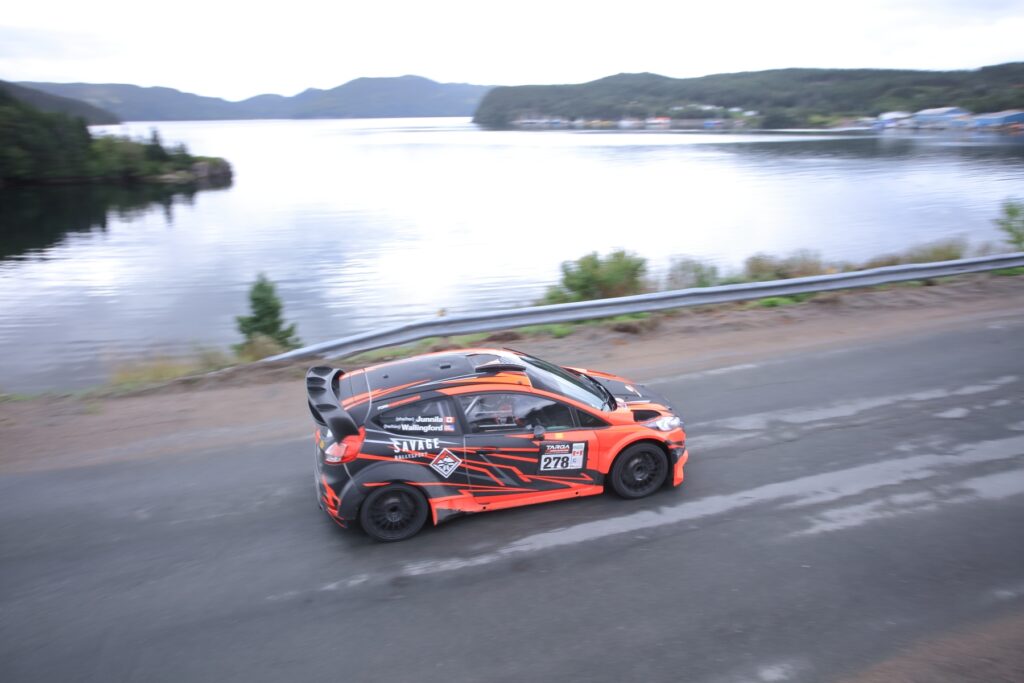
Driver Dave Wallingford and co-driver Leanne Junnila of Savage Rallysport campaigned this beast of a Ford Fiesta rally car in Targa 2 in 2023. (Photo: Ralph Saulnier)
Grand Touring (GT) is a time, speed and distance (TSD) competition, also known as a navigational rally. The emphasis in the Grand Touring competition is on precision, not outright speed. The goal is to maintain an average speed throughout the stage and to arrive at the finish within an allowed time window.
Marinus and Renee Damm are past champions in the Grand Touring division. (Photo: Ralph Saulnier)
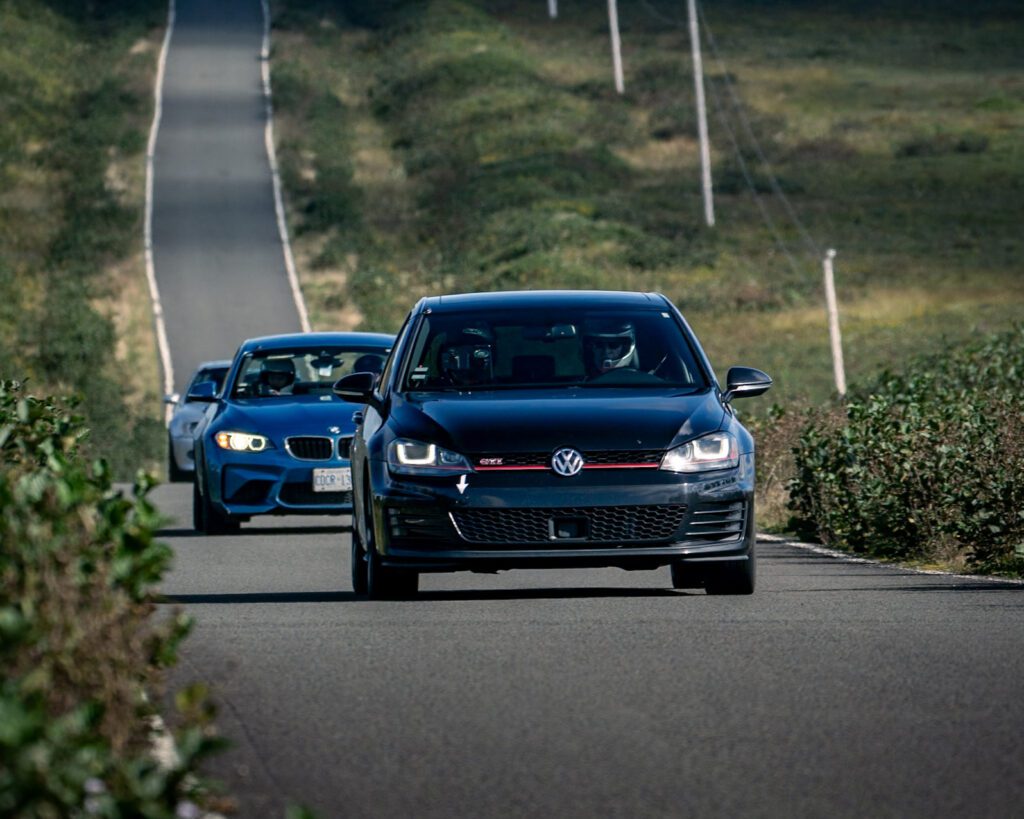
Targa Tour is a non-timed, non-competitive motorsport adventure. It is a tour within Targa that is designed to allow the owners of sports, classic and exotic cars to drive them the way they were made to be driven without the stress of competition. Targa Tour covers the same stages as the competitive divisions but the runs are not timed and the speeds are set lower.
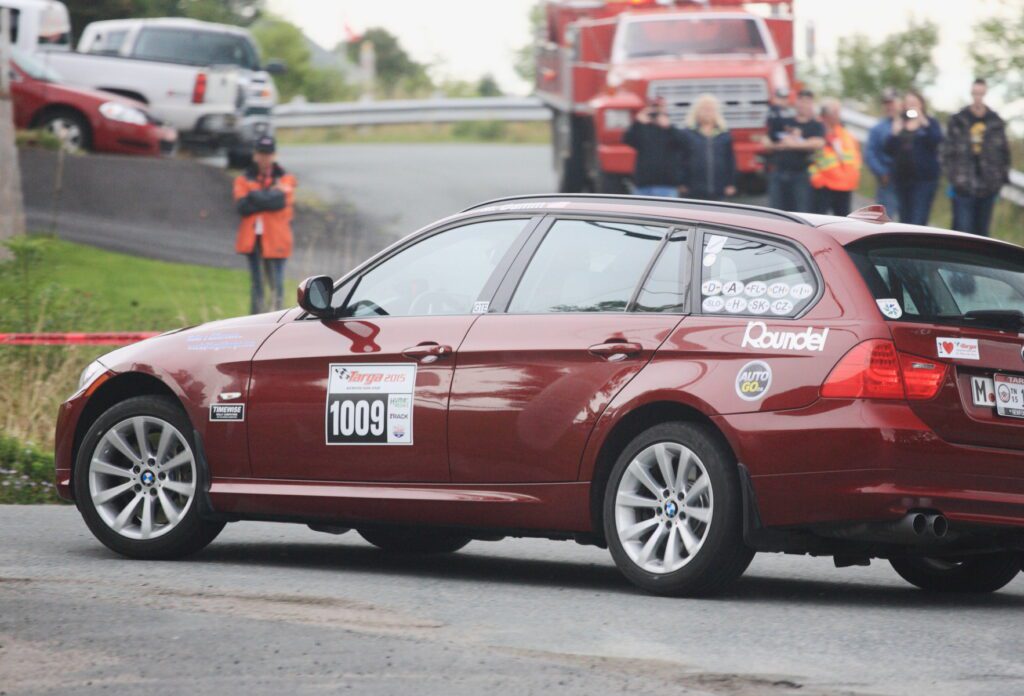
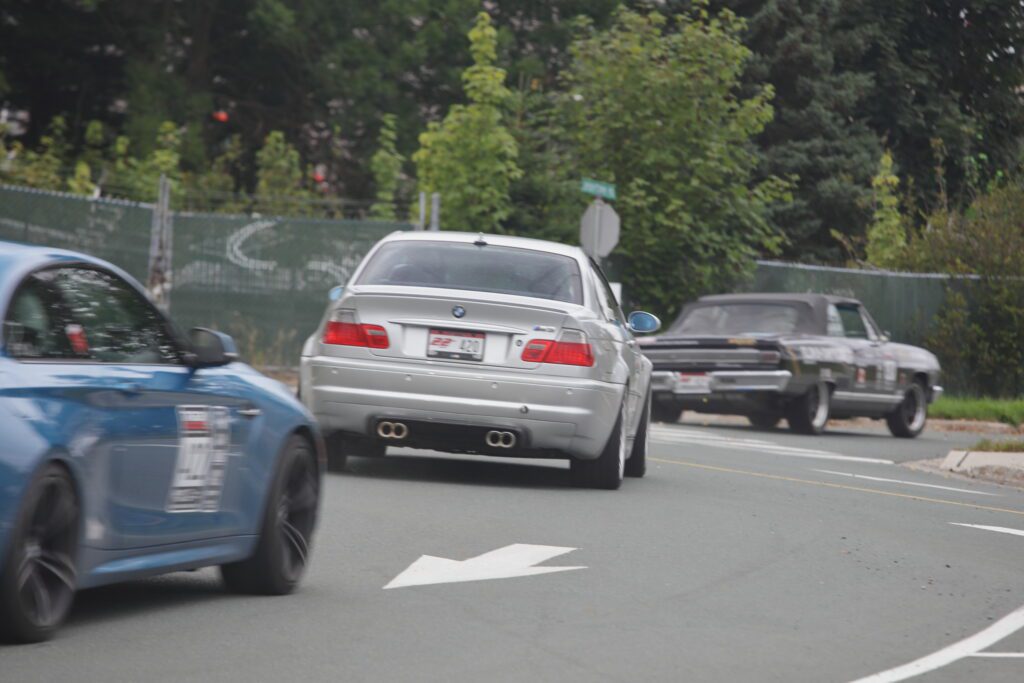
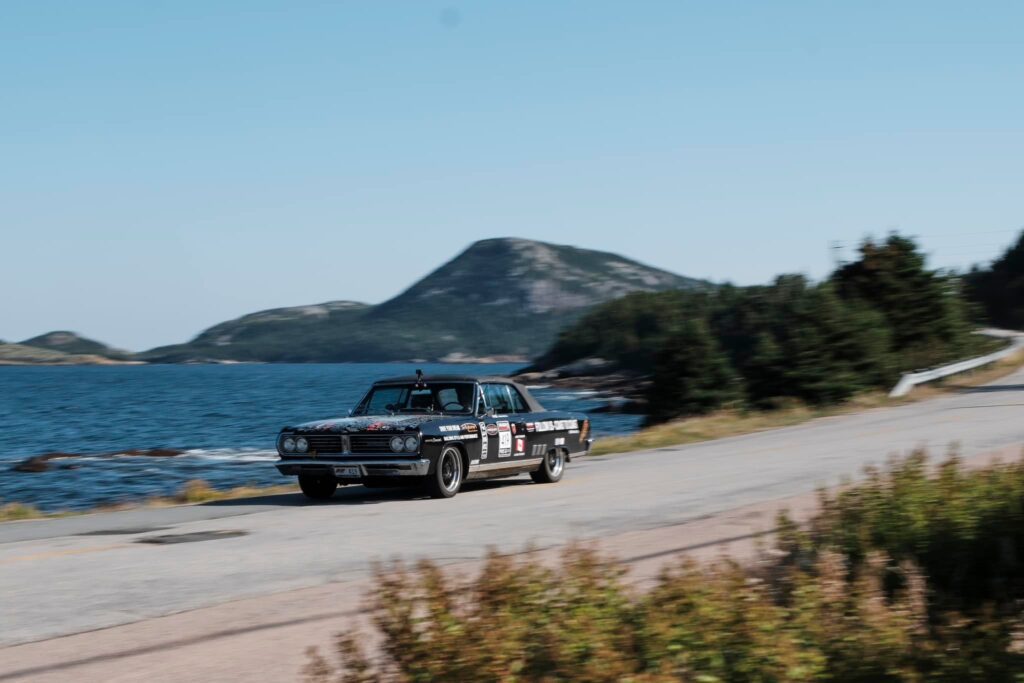
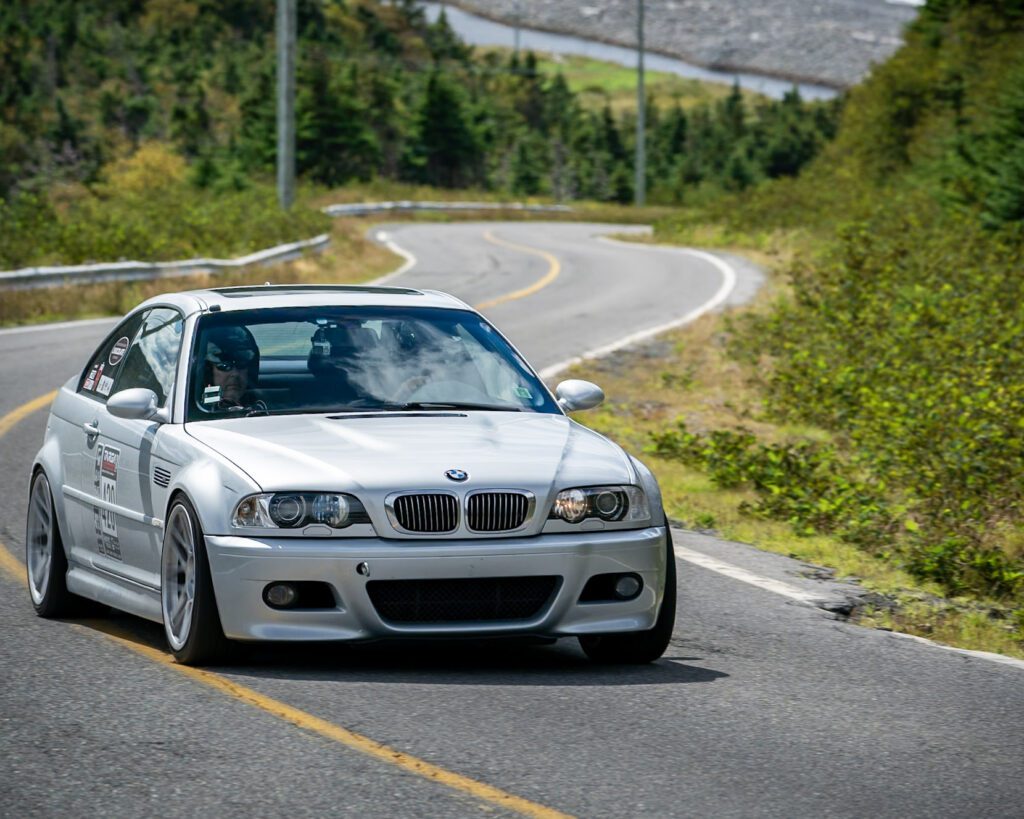
Two modern BMWs follow a classic Beaumont convertible through the streets of Bay Bulls in Targa Tour. (Photo: Ralph Saulnier)
Check the Rules and Regs page for more details on what is required for each division. If you have more questions, visit our FAQ and Event Info pages or contact us at info@targanfld.com.
Cars in the Tour on the road to Cape St. Mary’s. (Photo: Sam Heron)
So, you’ve always dreamed of entering Targa Newfoundland but you’re not interested in competing against others. You just want to have fun with your car on the open road (and closed ones too!). Targa Tour is for you.
You’ll drive the same amazing stages as Targa 1 and 2 without racing the clock. It’s all about enjoying the drive, the adventure, the scenery and the experience. Mostly it’s about enjoying yourself and your car. And you still get to ignore the posted limits on the closed stages!
Kurt and Lu Penner, aka Team Jellybean, drove all the way from British Columbia to Newfoundland to experience the Tour. “Targa has been one of the most amazing things I’ve ever done,” says Kurt. “The roads that we’re running, the scenery, the people of Newfoundland … everything is just unbelievable. It has been a fantastic experience.”
Kurt and Lu Penner were thrilled by the scenery and driving near Eastport. (Photo: Larry Strung)
Don Bray from PEI took part in the Tour last fall with his brother Frank from New Brunswick as the Bavarian Brothers. Don called it incredible fun and “one of the best driving experiences of my life. The driving was amazing; the scenery and the sights were amazing; and the people were amazing.”
Don Bray, shown above on the Cape Shore with his brother Frank navigating, described the Tour as incredible fun and one of the best driving experiences in his life. (Photo: Sam Heron)
What is Targa Tour?
The Targa Tour division is not a competition. It is a tour within Targa that is designed to allow the owners of sports, classic, and exotic cars to drive them the way they were made to be driven, within the limits prescribed by the event, but without the stress of competition.
What do I need to enter?
You need a road legal vehicle, a driver and co-driver, helmets, fire-resistant coveralls, and a healthy sense of adventure. Check the Rules and Regs page for more details.
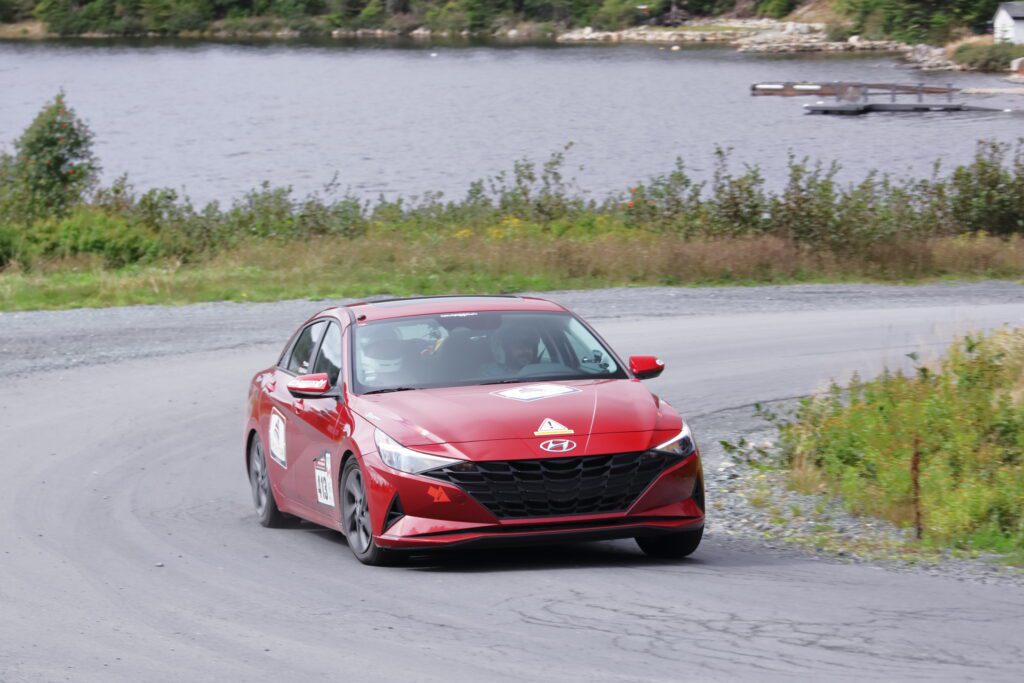
This bone stock Hyundai Elantra performed quite well in the Tour in 2023. (Photo: Ralph Saulnier)
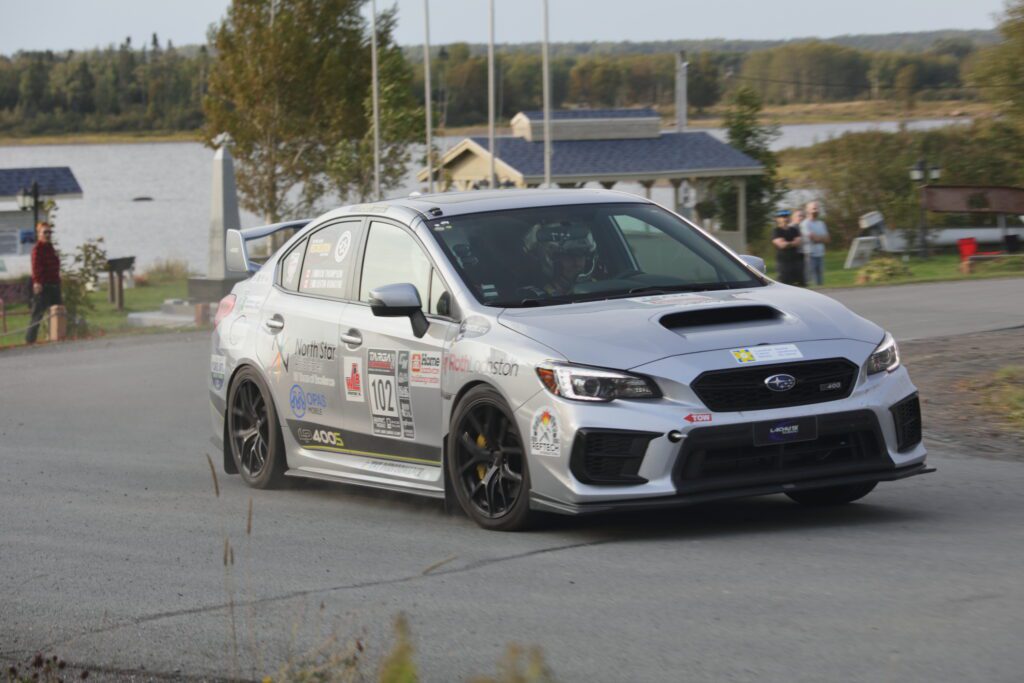
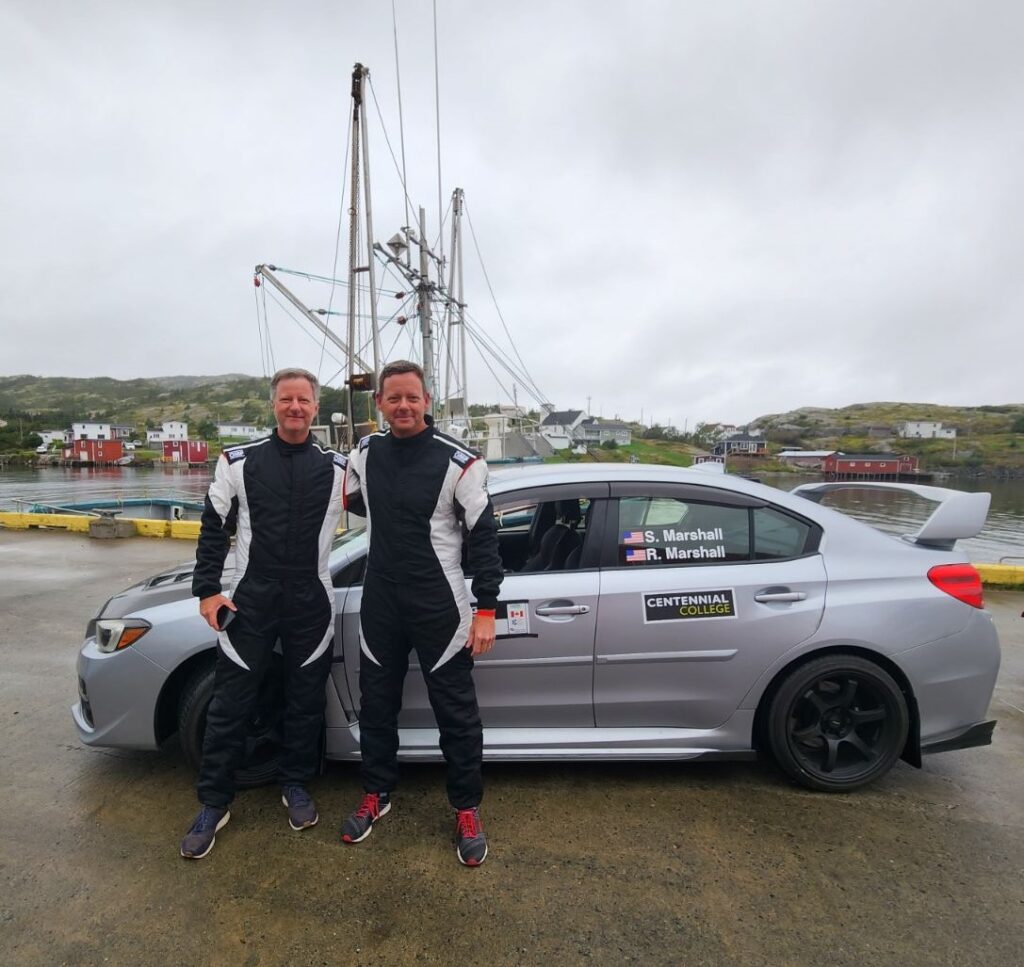
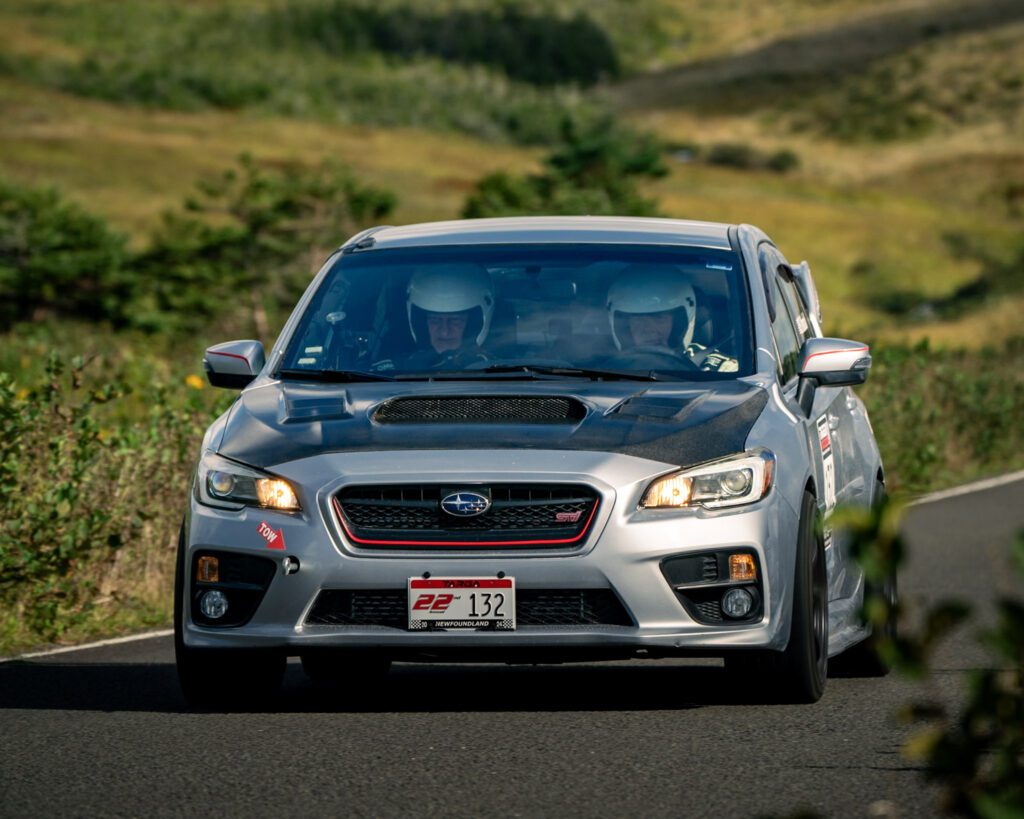
Driver: Sam Marshall Co-driver: Rick Marshall Vehicle: 2016 Subaru STI Division: Targa 1 Country: United States
The Marshall brothers were flying on the road to Cape St. Mary’s. (Photo: Ralph Saulnier)
Florida brothers make it a Targa three-peat
Targa Newfoundland has become an annual pilgrimage for Florida brothers Sam and Rick Marshall. This year will make their third Targa rally in a row. What brings them back year after year?
Rick and Sam Marshall on the wharf in Salvage. (Photo: Ralph Saulnier)
“The first year we were attracted to racing through beautiful towns and the scenic transits between them. Returning, we are most looking forward to spending time with the Targa family,” says Sam.
Rick echoes his brother’s sentiment. “Honestly, the people bring us back. I think if it weren’t for the people, yeah, you’d be running around in cars and racing would be fun. But the people just put it over the top. What other event is there where you go and meet all these different racers that you become friends with and you become friends with the organizers?”
The Marshalls have family ties to Newfoundland. Their grandfather was born in St. John’s and emigrated to Boston in the early 1900’s. The family still have connections in the Trinity Bay area. But it wasn’t until a few years ago that the brothers and other family members returned to Newfoundland to visit the ancestral homeland. That’s how they heard about Targa.
“It’s a unique event,” says Sam. “The weather’s unique. The people are unique each time you get everybody together. It was good to see folks who were here last year. That’s probably one of the main things that we were looking forward to, seeing the folks that put the event on and some of the ones we had driven with last year. That’s really pretty special for us.”
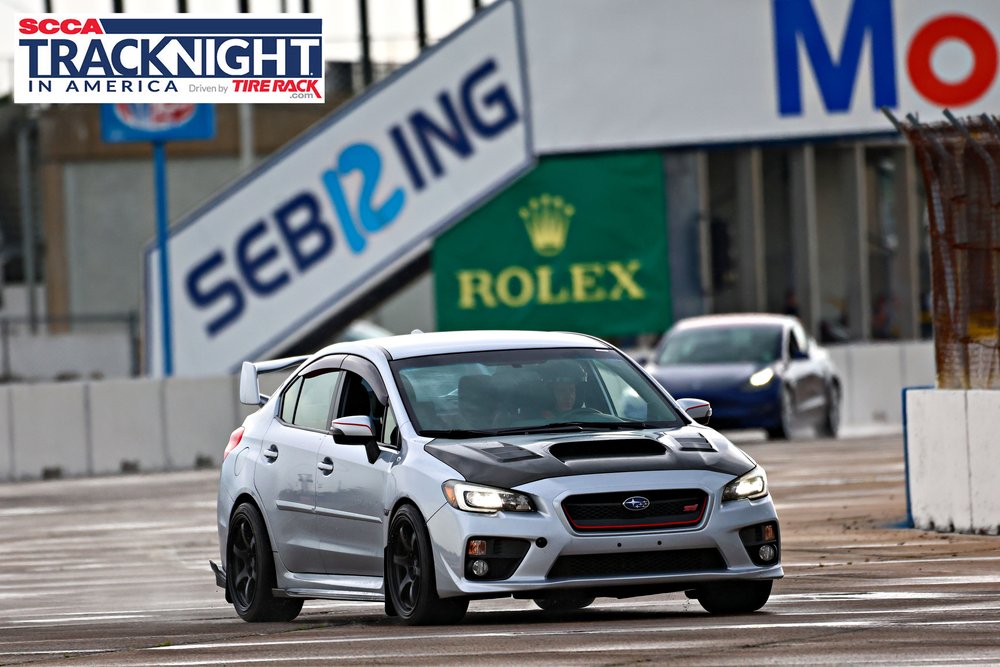
Back home in sunny Florida, they enjoy competing in autocross as members of Gulfcoast Autocrossers and running fast laps at legendary Sebring. They competed in Targa Newfoundland in the Targa 1 division in 2023 and 2024.
Their modified 2016 Subaru STI has proven to be a fast ride on the roads of The Rock. To make it speedy they added an IAG long block, FP Blue Turbo and front mount intercooler and to make it stop quickly it has EBC Red Stuff brake pads.
“We had as much of a blast as we had last year and we’ll be back again,” says Rick. “Where else can you put together racing through town in a car with your brother in a land that my ancestors were roaming around? You can’t beat that. It’s the best. “
The Marshalls in their mobile office. (Photo: Sam Heron)
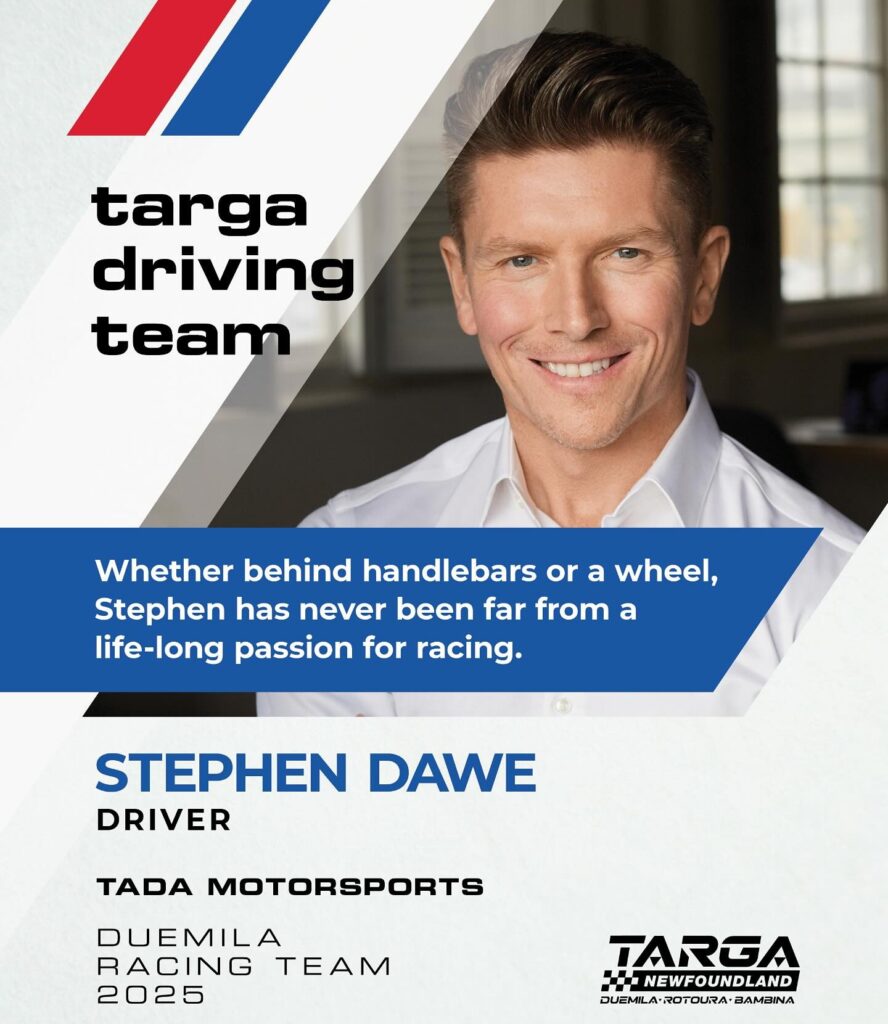
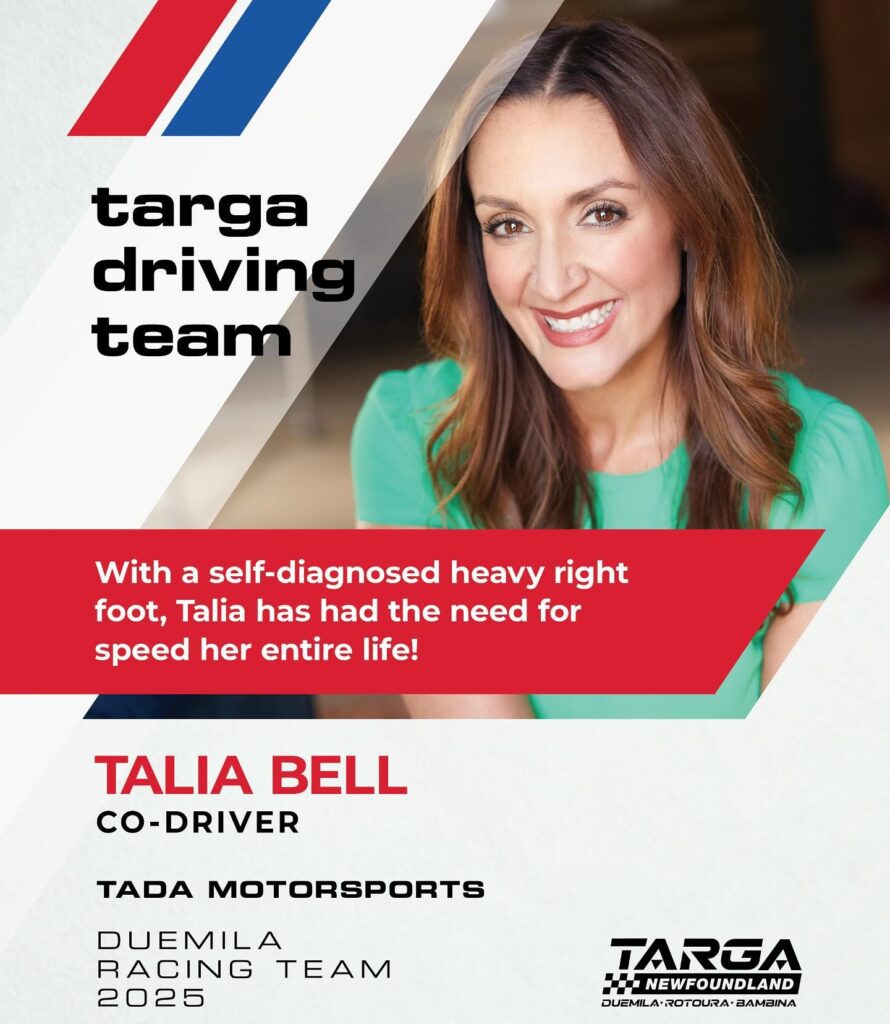
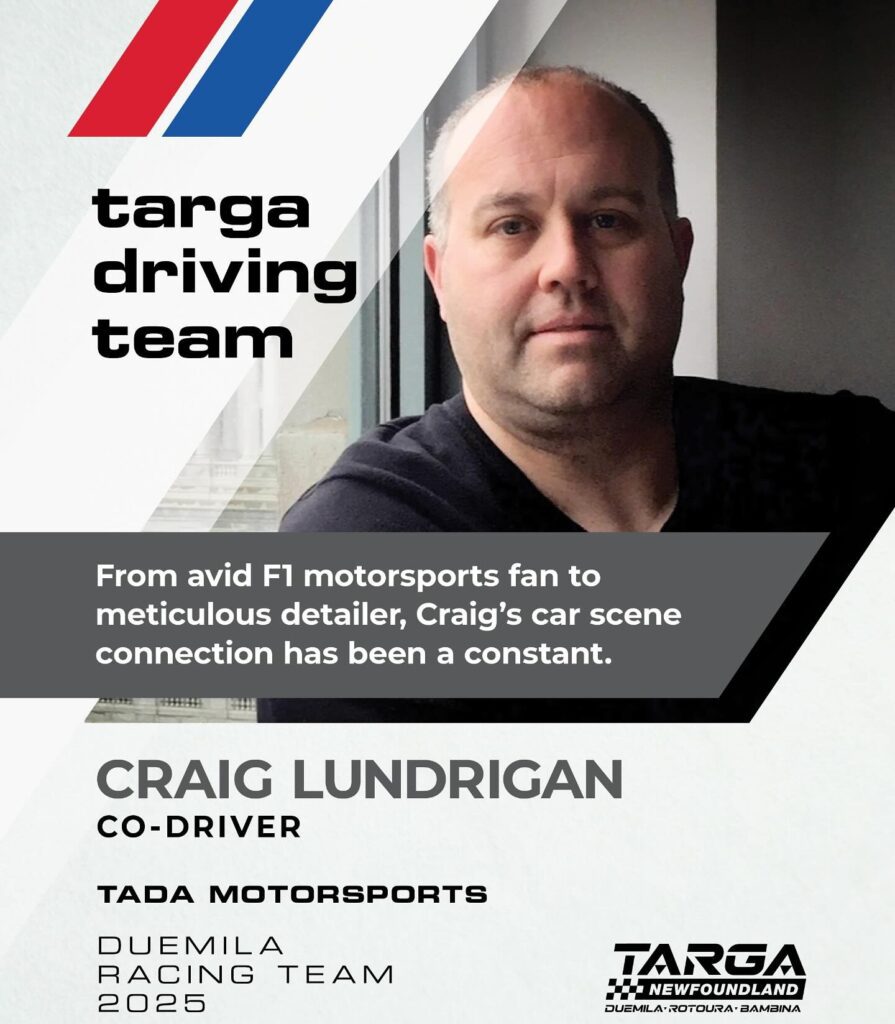
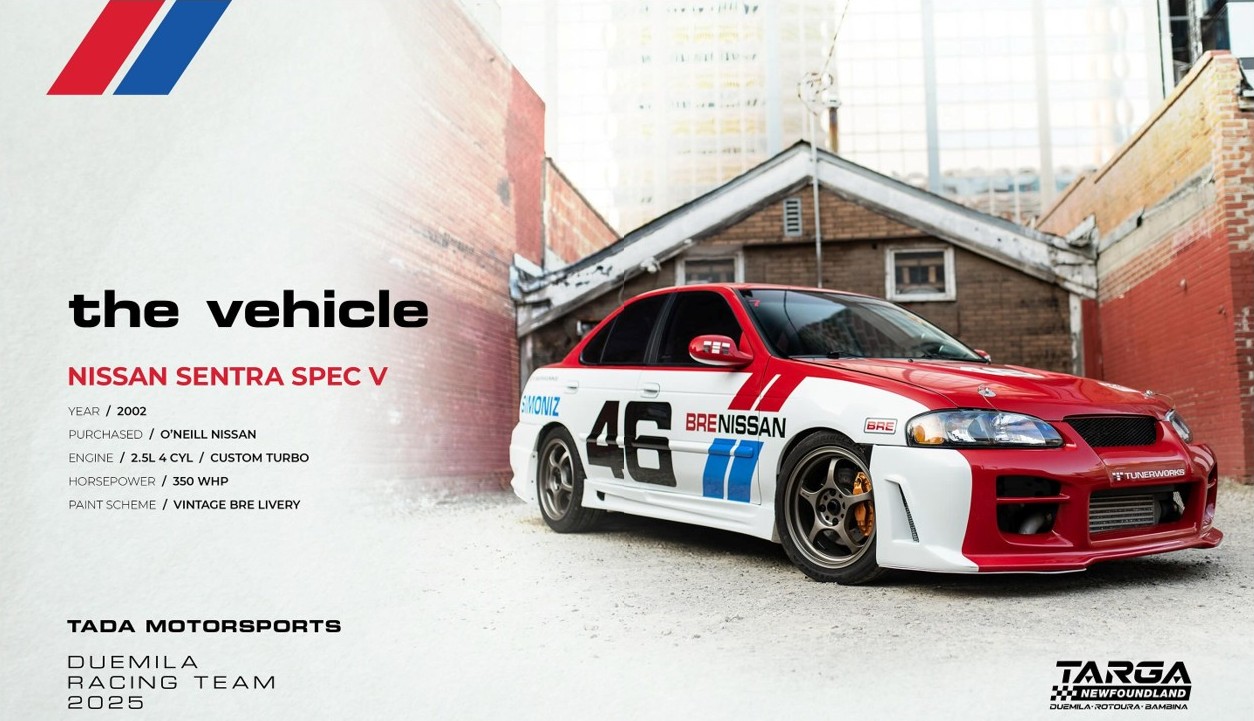
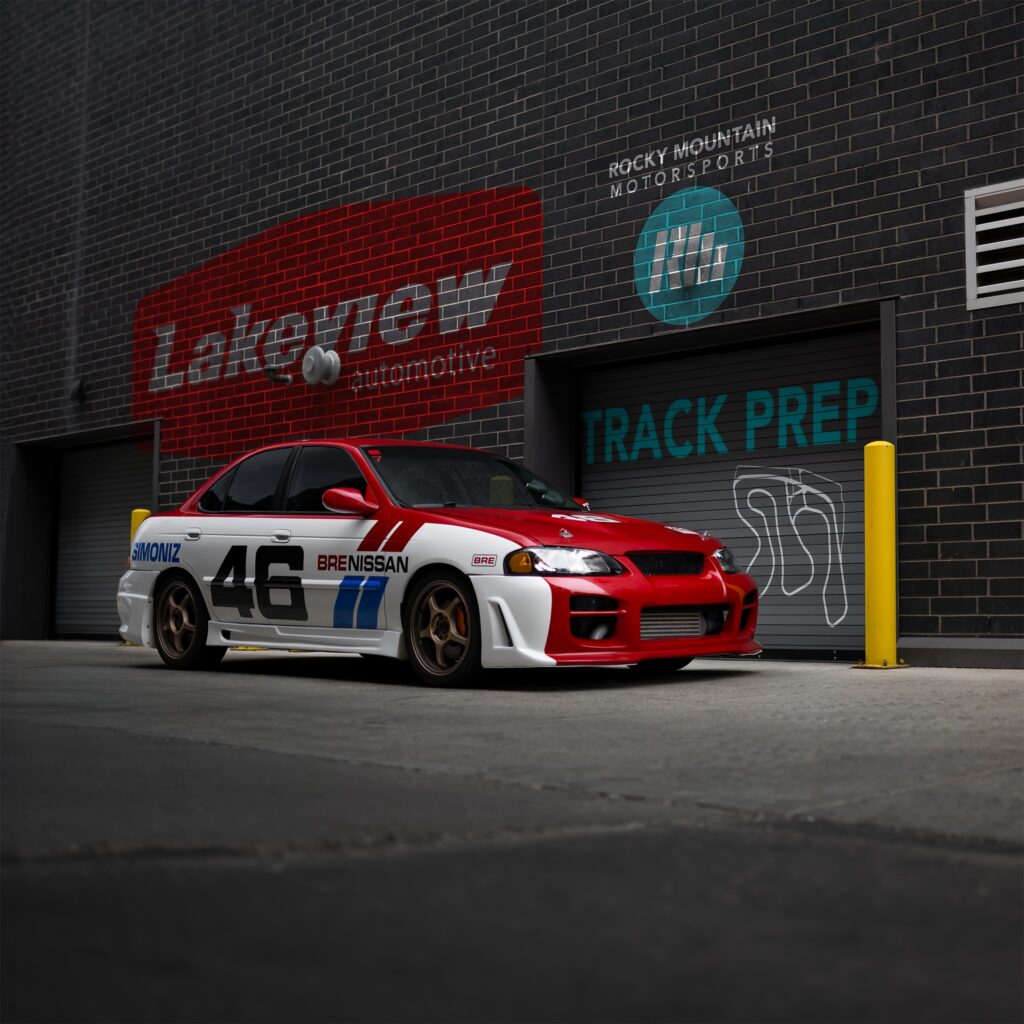
Driver: Stephen Dawe Co-driver: Talia Bell Co-driver: Craig Lundrigan Vehicle: 2002 Nissan Sentra Spec V Division: Targa 1 Country: Canada
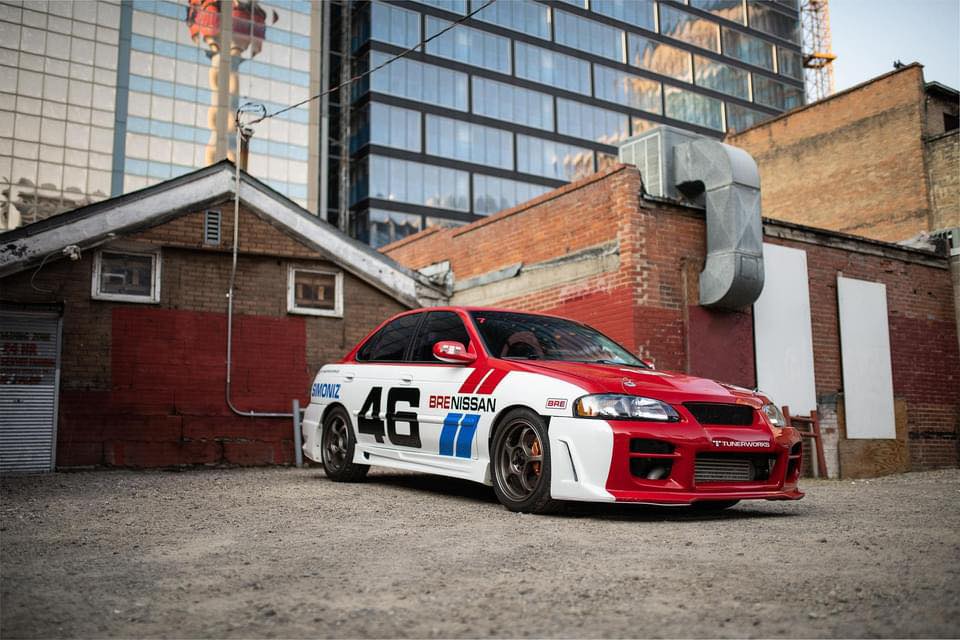
This Nissan Sentra is making a homecoming to Newfoundland after 23 years. (Photo: Stephen Dawe)
Coming full circle – a Targa team 23 years in the making
In early 2002, a shiny new silver Nissan Spec V drove off the O’Neill Nissan lot in Mount Pearl, Newfoundland. Later that year, it left the island just before the very first running of Targa Newfoundland. Now, 23 years later, both car and driver—and a kick-ass co-driving team—have returned home to “The Rock” to live out a racing dream that has been building for more than two decades.
TADA Motorsports – It’s magic
“Our team name, TADA, (pronounced as a quick tada, or in a drawn out tah-daaah) is derived simply from the ‘Ta’ in lovely co-driver Talia’s name, and the ‘Da’ from my last name Dawe,” says Stephen.
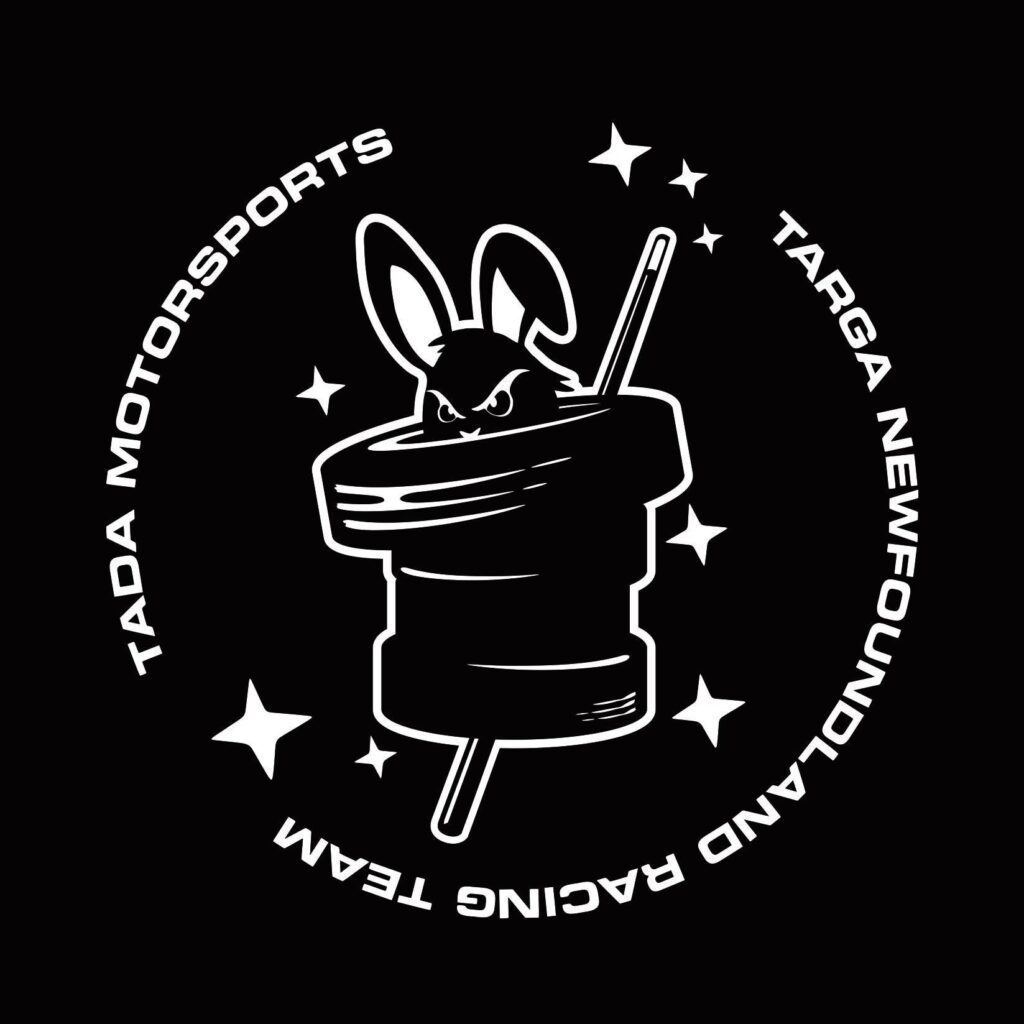
“The drawn out version, typically accompanying a magician’s rabbit being pulled from a hat (see our team logo featuring a mad bunny peaking from a top hat-esque stack of tires) is just a fun thing we used to say on occasion, mostly when accomplishing something sarcastically simple. In extreme cases, when going for maximum cheesiness, even paired by a raised arms motion, like a gymnast sticking the landing,” he says.
“It’s no illusion that we have consistently heard Targa is nothing short of a magical experience—from the passion of the event to the teams, the support, the volunteers, and to every community that participates in this mystical place called Newfoundland—and so it’s easy to see that when it came to naming our race team, TADA Motorsports was clearly the only option,” adds Stephen.
Stephen Dawe – Driver
Whether behind the handlebars or the wheel, Stephen has never been far from a life-long passion for racing. From dirt ovals and drag strips, to track days and off-road, Stephen has always dabbled in full-throttle hobbies. In addition to being a member at Alberta’s Tilke-designed circuit, Rocky Mountain Motorsports, he has put down laps at tracks and motorsport parks across the country and beyond, and has held racing licenses on both two wheels and four. Originally from Newfoundland, Stephen has followed his creative advertising career across the country. Three years ago, he and his wife, Talia, bought a home back in St. John’s, and the race event on the must-do list for more than twenty years came to life — Targa Newfoundland, let’s go!
Talia Bell – Co-Driver With a self-diagnosed heavy right foot, Talia has had the need for speed her entire life! As Stephen’s life-long partner, a Targa team was in the cards from “I-do”. Talia’s first car was a 5.0 L mustang and she didn’t have any trouble finding out where the speedo stopped. As a C-suite executive she’s excited to redirect some of that unrealized need-for-speed into the Targa Newfoundland 8-day, on-road rally event—calling the turns and checking off the wins. Now, an honorary Newfoundlander herself, Talia has her heart firmly planted in the east coast, and her right foot planted to the mat.
Craig Lundrigan – Co-Driver From avid F1 motorsports fan to meticulous auto detailer, Craig’s car scene connection has been a constant. Craig and Stephen met during the forming of one of Newfoundland’s original tuner scene car clubs back in the early 2000s. One of those car show events particularly standing out via the attendance of another car-minded Craig (last name Lieberman)—well-known Skyline whisperer and technical director for the Fast and the Furious movie franchise. While he may wield financial planning by day, as a trained mechanic, (our) Craig brings the technical know-how along with the must-have checklists to help get us across the line with everything right where it needs to be.
The Vehicle – 2002 Nissan Sentra Spec V
After living the first year of its life in St John’s, Newfoundland, this once modest sub-200 hp Nissan Sentra has spent the last 20 years at circuits and shows across the country. In that time, it’s been bulking up and trying on some new looks here and there.
“This look seemed to stick—an homage to the early 70s @bre.datsun livery, the Sentra was as close as I could get to a Datsun 510 at the time. But in a world of vinyl wraps, this one is all paint, so I think I’m going to keep it,” says Stephen.
From outside to inside, while the core pieces are mostly there, there’s not a lot that your average four door sedan owner is likely to recognize. From fibreglass bucket seats and custom consoles to enough gauges to qualify for take off, there’s lots to take in. Under the hood, it’s all pretty much the same, except for that snail bolted in the front. The Nissan puts out 350 WHP.
Those wheels are forged RAYS that Stephen found at a dealership unloading them years ago when they stopped putting them on the Nismo Edition Spec V. For stopping power a set of Brembos came along with the wheels from an ’04.